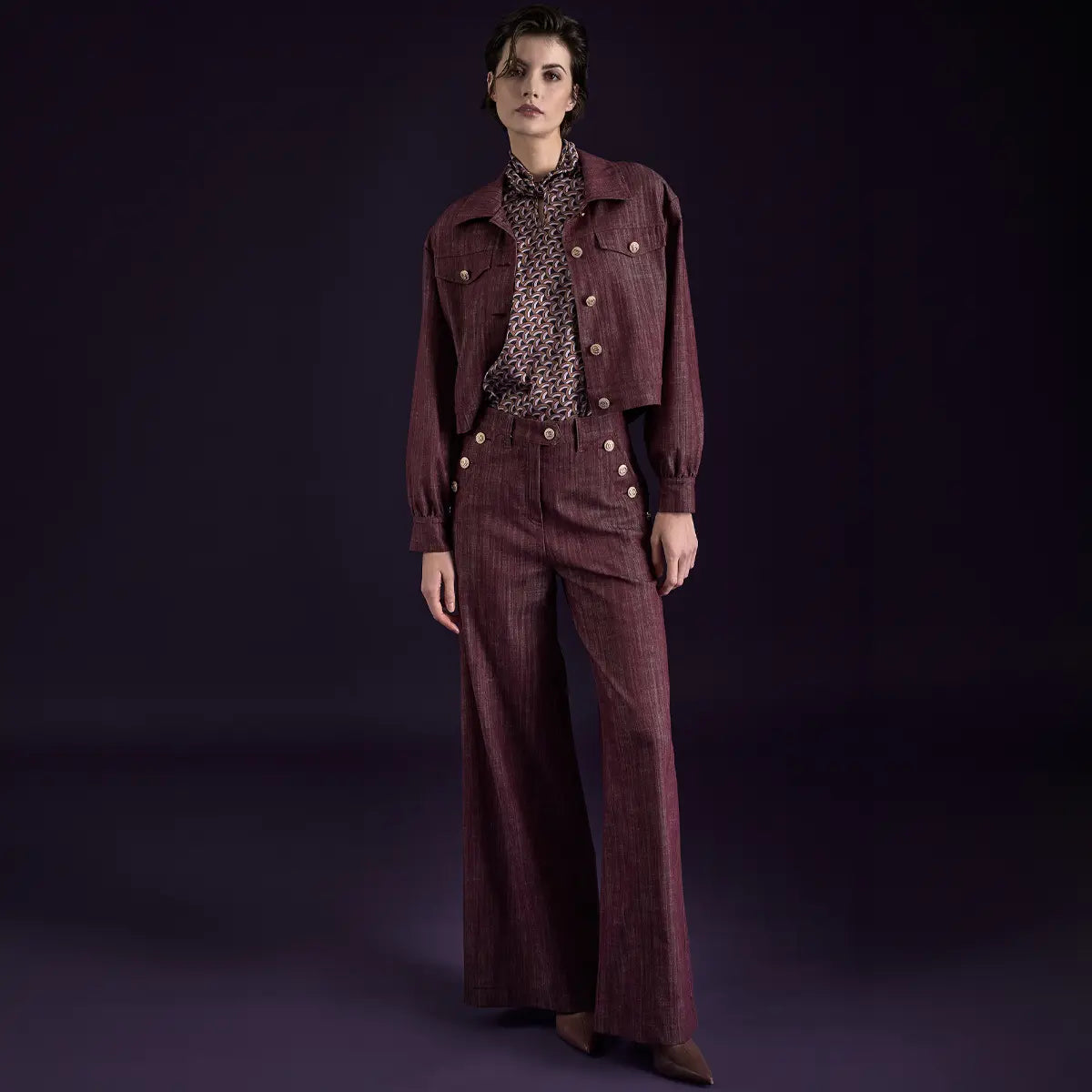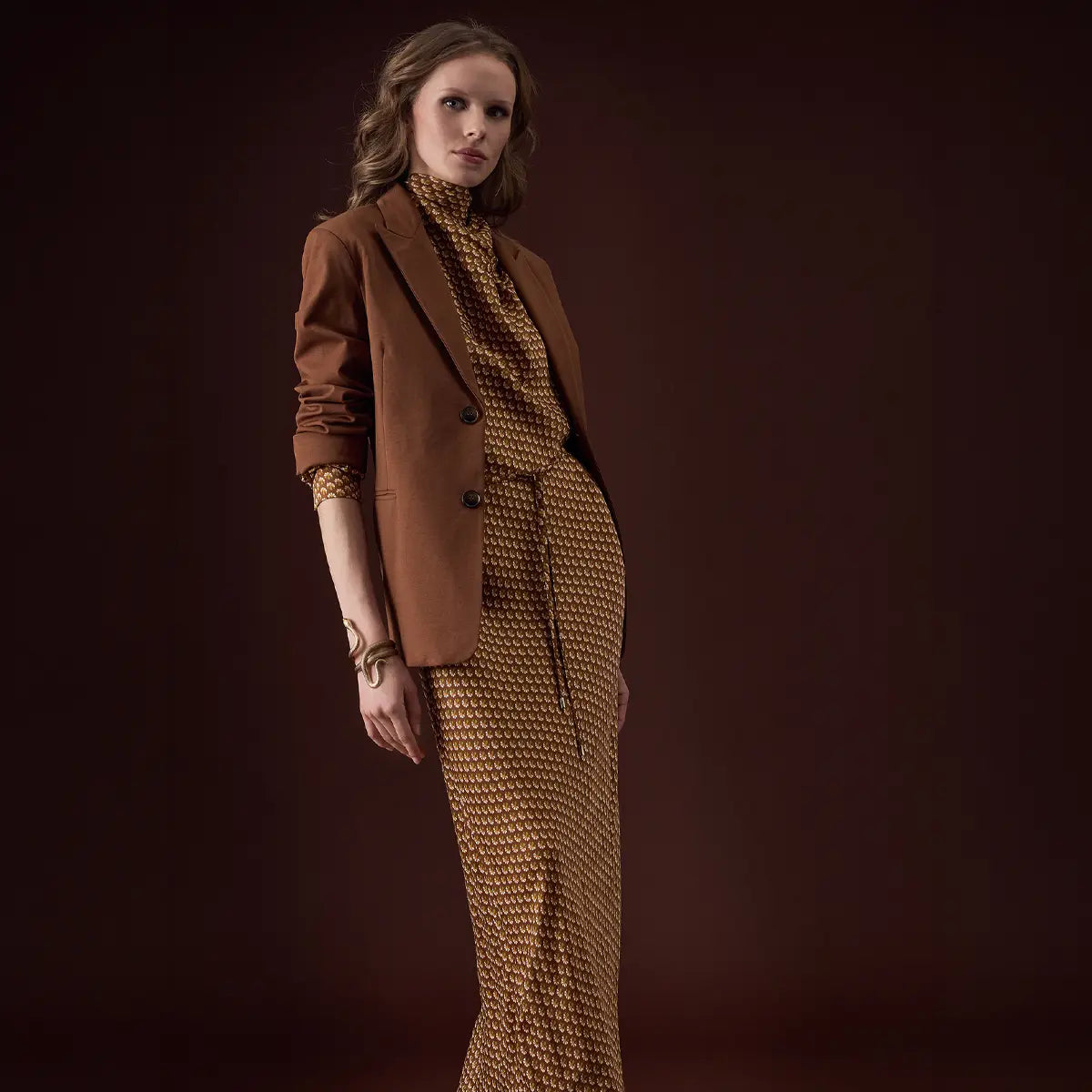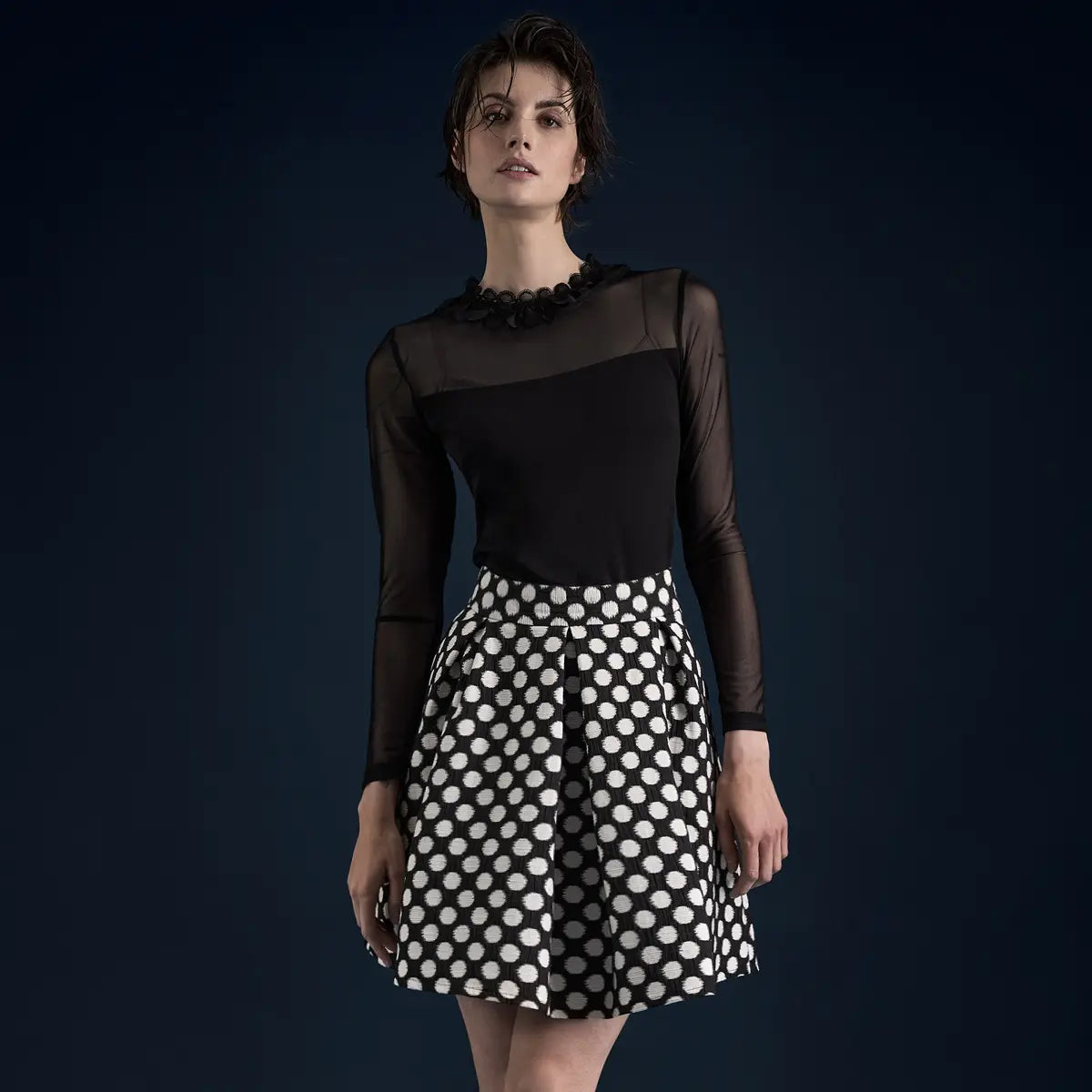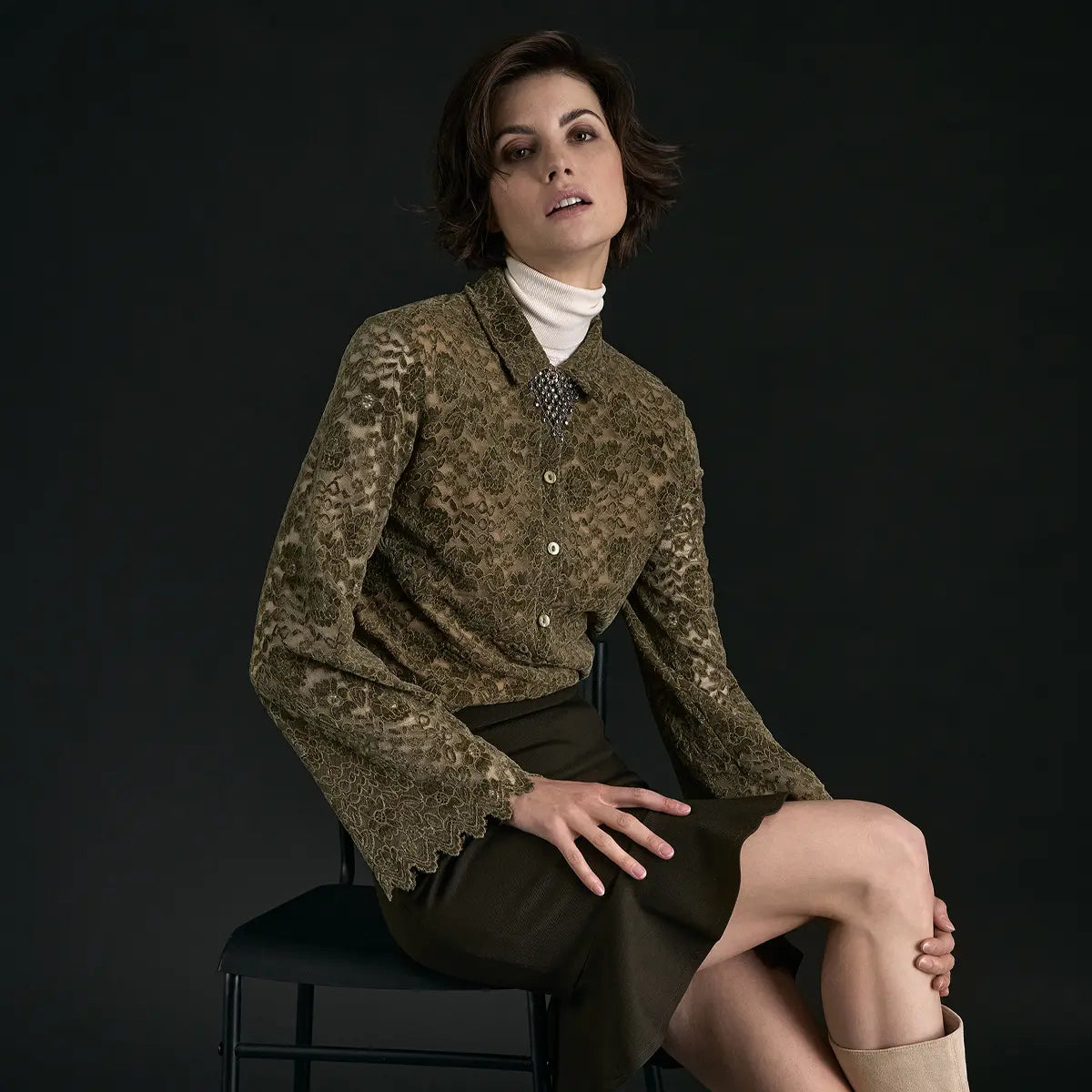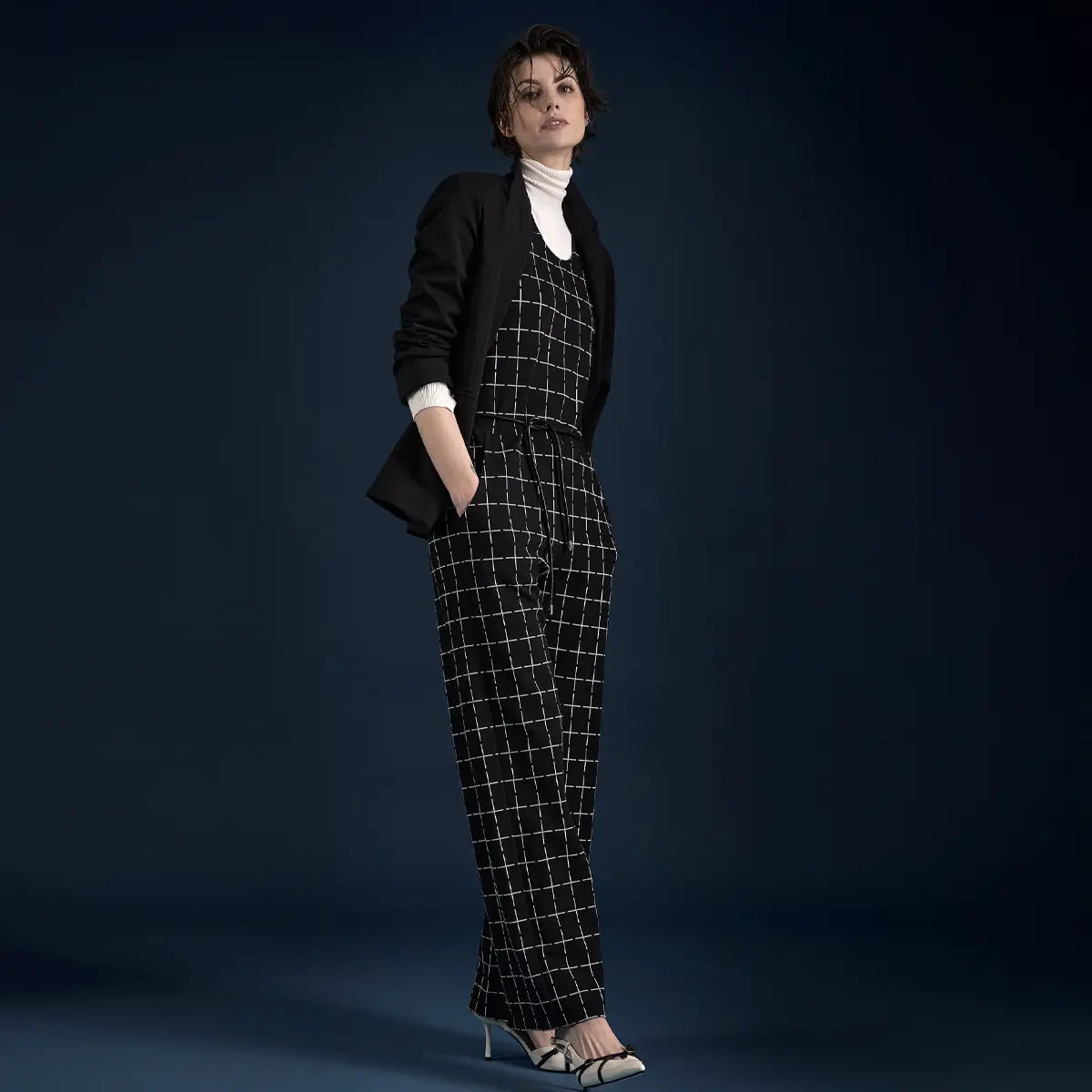


Back to black — yes, it’s true, black is magical. Creative types love wearing black; the little black dress is considered one of the most elegant dresses, and a black outfit is always a hit, especially for a night out. But did you know that, scientifically speaking, black isn’t actually a color? We’ll show you how to style this “non-color” with flair—and what to keep in mind so that black makes you shine.
In this guide:
Basic Knowledge of Black The Allure of Black Meaning and Effect Combining Black (Interactive) Who Looks Good in BlackBlack in Winter & Summer — Differences in StylingColor Combinations We Love Black Outfits — How to Style Different Pieces Dos & Don’ts for Styling Black Frequently Asked Questions About Pairing Black
Basic Knowledge: Black
Would you have known? Scientifically speaking, black is the absence of light—and therefore not a color. Just imagine a rainbow to understand that black does not lie within the visible color spectrum. Black is an optical effect that occurs due to the absence of light and describes a colorless state. And yet this “non-color” is so important—not only in fashion, where it’s a timeless classic and responsible for iconic looks.
Without black, art would have only half its impact, because it is only through black that shadows can be rendered—shadows that lend depth. Life is experienced through contrast, and without light and shadow, the impact of all other colors would be only half as intense. On the other hand, the expressions “seeing everything in a negative light” and “painting a bleak picture” are proverbial. Here, you’ll learn what black symbolizes and, above all, how you can style black to your advantage.
Black as a non-color: Black reflects the absence of light. And thus, at the same time, the absence of color. Theoretically, black absorbs 100% of light and reflects 0% of light. Black is one of the earliest pigments used by artists, even though there were hardly any natural pigments available besides soot.

Black speaks the language of power—a suit and turtleneck against the skyline. @AI illustration
The Allure of Black
Expertise, professionalism, a sense of style, and leadership —whether it’s a black suit or an evening gown, in the world of fashion, black is associated with many qualities. This applies not only to high-profile occasions and the executive suites of the financial and business worlds, but also to the creative industry, architects, marketing professionals, and intellectuals. One person who made black turtlenecks socially acceptable was mastermind and Apple co-founder Steve Jobs. His style was iconic—and it spoke volumes: Because black lets the colors take center stage. It allows ideas to come to the forefront and make their impact. All-over black looks have outlasted every retro trend and are considered a style classic that still makes you stand out at any art opening.
Meaning and Impact
Just how ambivalent this “non-color” is perceived becomes clear when you take a closer look at black. Black stands for darkness and evil—white for good. That’s what the world of fairy tales and legends teaches us from childhood. There, black is generally interpreted in very polar terms. Black and white, so to speak. The absence of light is the realm of dark forces and demons, and it often symbolizes the end or death. That’s why black is the traditional color of mourning. On the other hand, we associate authority, dignity, and elegance with black—all very positive qualities. Just think of the Man in Black, Johnny Cash.
Incidentally, other cultures perceive black differently. There, this “non-color” symbolizes wealth, strength, and good fortune. The black African soil is particularly fertile. In this country, the nobility distinguished themselves from the colorful clothing of the common people by wearing jet-black robes. Black print on white creates the greatest possible contrast and, because of this distinction, symbolizes clarity. The fashion world loves black and uses it to convey exceptional elegance, formal looks—and also for provocation. All minimalists love black; no other shade creates stronger contrasts. We perceive black outfits as trendy, cool, and modern. Today, black has achieved cult status.
Positive associations:
Elegance, Coolness, Minimalism, Clarity, Structure, Individuality, Modernity, Power, Sophistication, Enigmatic Quality
Negative associations:
Detachment, grief, death, negativity, pessimism, isolation, emptiness, threat, the unknown, reserve, aloofness
Styling with Black (Interactive)
Hover your mouse over a color—and see what black looks like when combined with that color.
Give it a try: What color goes well with black?
Choose a color from the palette—and see right away how it looks.
Black
#0A0A0A
Scale
Anthracite
#3C3D44
Slate
#555861
Medium Gray
#7B7E84
Stone Gray
#A8A5A0
Silver-gray
#C0C2C8
Light Gray
#E2E2E4
Classic
Cream
#EFE4CA
Beige
#D4C5A8
Camel
#C9A88A
Navy
#1F2A3A
White
#FAFAFA
Khaki
#8A8651
Statement
Red
#C13E3E
Bordeaux
#6B1D2F
Emerald
#1F6B4D
Mustard yellow
#C9942E
Pink
#E83870
Purple
#7B3F8F
Who Looks Good in Black?
First things first: Black clothing has many advantages—it makes you look slimmer because it hides those unwanted little bulges. Black is a wonderful team player when it comes to layering and pairs well with other colors, making for endless combinations. Black goes well with pastels, earth tones, bright colors, or white. Shimmering or colorful accessories also tend to look wonderful. On top of that, black clothing rarely divides opinion—by general consensus, you’re well-dressed when you wear it. The downside, however, is that black can also make you look older: tops that sit close to the neck can cast shadows on your skin, making fine lines appear much deeper.
The truth is: Unfortunately, black doesn't look good on everyone. Depending on your skin type, face shape, and hair color, black can look very harsh. Maybe you've noticed that, too?
The Perfect Match: Black Is Ideal for the Winter Type
Only women who fall into the“winter type” categorylook absolutely great dressed all in black. Black is definitely the color for winter women. Why? Because natural contrasts are already at play here: fair, porcelain skin, light eyes, and usually very dark hair—ranging from mahogany brown to black. The so-called “Snow White” type pairs perfectly with black and other bold, cool colors. This holds true even if the skin is slightly darker with an olive undertone. This works because dark eyes, eyebrows, and skin tone lower the level of contrast. And we perceive that as harmonious. As a Winter type, you can opt for a look entirely in black, or you can mix the look with the other intense shades in your palette.

The winter type and black—a contrast that’s a perfect match. @AI-Illustration
Wearable: Black is an option for the summer type
Also Summer types (complexion with a bluish undertone, cool-toned eyes) and summer-winter mixed types can handle the contrast and thus wear black right next to their face —but this does require a bit of makeup to soften the harsh contrast. Make sure black doesn’t make you look drab. The clear recommendation is to choose a matte black that leans more toward anthracite. Or you can opt for a combination: wear a black blazer with a gray or blue shirt underneath, or a light green dress. A necklace can also add some flair to the overall look.

For the summer type, black becomes anthracite—softer, more flattering. @AI illustration
Only with a little trickery! Black for spring and fall types
So far, so good. Winter types and black are a perfect match, and summer (mixed) types can wear black. And now for the good news: All other color types can also choose black, but should keep a few simple styling tips in mind.
Are you a Spring type? Then black is the worst of all (non-)colors for you. That’s because the shades in the spring palette are all light, bright, and warm. You should pair your black piece with flattering colors like beige, coral, or cream near your face. This could be in the form of a scarf or a top. Pure black would wash out any color in your look.
Are you an "autumn" type? We recommend opting for soft fabrics like knit, chiffon, or velvet and showing plenty of skin between your face and the black piece. Anything that adds softness works well, like ruffles or lace. Scarves in soft shades also go well with this look. Tip:Fall typesshould wear a light-colored trench coat over the black dress, and you’re all set.
More Tips: How to Wear Black Close to Your Face
- Choose a top with a neckline to show some skin between your face and the black garment
- Mix and match scarves, jackets, and shawls in your ideal colors
- Use necklaces and earrings as "icebreakers"
- Use makeup to enhance contrasts and create a counterbalance to black
Black in Winter & Summer — Any Differences in Styling?
There's no question about it: Black can be worn any time of year. But there are a few things to keep in mind if you want black to be a versatile and indispensable part of your wardrobe all year round.
Wearing Black in Winter
There’s no question about it: Black is the color of the cold. Black coats, anoraks, turtlenecks, suit pants, or maxi knit dresses—in no other season does this “non-color” play such a major role as it does in winter. Many pieces are true classics—just think of the long wool coat. In winter, we love all-black looks, such as a mini A-line dress with opaque tights, over-the-knee boots, and a midi coat. Here’s another tip: Add shades of gray to your outfit to give the black a bit more vibrancy—a matching scarf can work wonders
.

The color of the cold, brought to life by a gray scarf. @AI illustration
Go for a skillful mix of materials
Black faux leather pants or skirts are in season during the winter. Pair them with fabrics like chunky knit or silk for your daytime or night-out outfits. How about pairing faux leather pants with a black or charcoal-gray chunky-knit sweater? In the evening, you could opt for a silk top with an oversized blazer instead. The fact is: Black faux leather looks sophisticated and can be just as appropriate for the office as it is for a romantic candlelit dinner.
Tip: Black Lace
You can wear black lacenot just in the evening, but during the day, too. Simply pair this elegant piece with a knit cardigan, jeans, and boots—and you’ve got a casual look. The advantage of this playful fabric is that it reveals glimpses of skin. That means even if you’re a spring or fall type, you can wear this softer version of black without needing much additional styling.
Fishnet tights
If you want to go for a neo-gothic look this winter or simply add a special touch, you can wear black fishnet tights. It makes any outfit a head-turner and pairs perfectly with miniskirts and over-the-knee boots or tight-fitting knee-high boots, as well as dresses. Rugged boots make for a cool outfit. Just make sure your look stays stylish and that you wear high-quality materials—pairing fishnet tights requires a bit of finesse; otherwise, your outfit can quickly go wrong.
Not all blacks are the same
Even the darkest (non-)color has variations and shades. You’ve probably heard of licorice, anthracite, raven black, or asphalt. These subtle differences make all the difference in all-over looks—and allow for exciting tone-on-tone combinations.
Wearing Black in the Summer
It works—if you know how. In the summer, the careful selection of fabrics and materials matters even more than your winter style. Didyouknowthat black fabrics let through a lower percentage of UV rays and thus offer better protection against sunburn? Black dresses,two-piece sets,jumpsuits, or palazzo pants are just as stylish in the summer. Slightly shimmering fabrics can look fantastic, especially on lightly tanned skin
.

Black works for summer, too—flowing linen, worn lightly. @AI illustration
Go for flowing silhouettes, oversized cuts, and lightweight fabrics
When temperatures are high, we tend to prefer light, airy clothing. Almost instinctively, we reach for flowing maxi dresses or oversized styles, and feel constricted in skin-tight outfits. Natural materials like linen or cotton are the go-to choices in the summer heat. The texture and airy charm of the fabric make it feel comfortable against your skin, even on hot days. Whether it’s palazzo pants, a slip dress, a tunic, or shorts—you’ll be well-dressed this summer even in black pieces.
The main thing: keep it playful! Patterns, embroidery, puff sleeves, or a crochet look
Clean lines and shapes work perfectly.However, if you prefer a more playful style, you can add a touch of summery lightness to a black outfit with details like cutouts, embroidery, or openwork lace. Crochet fabric is also popular and naturally allows for better air circulation. Especially trendy: the boho look. A great choice for anyone who prefers spring or fall styles is a top with a Carmen neckline, which leaves plenty of skin showing between you and the black fabric.
Tip: Night-out Look
Create a chic and cool all-black look for a night out: Choose a pair of slightly shimmering, flowing palazzo pants and pair them with a black silk top with spaghetti straps and a lace insert on the back. Strappy sandals with heels and gold statement jewelry complete the outfit.
Warning: Black may fade
Be sure to check that your favorite piece hasn't faded after several washes. You won't notice it until you try to pair that black shirt with your new jeans. Faded shades of black can ruin your whole outfit.
Discover black dresses
Color combinations we love to see
Black is very versatile when it comes to color combinations, yet opinions differ among some color teams. Learn more about black and how it relates to other colors.
Combining Blue & Black
Perhaps it's because dark blue and black are very similar—which is why many people are reluctant to pair them. And yet this is one of the most elegant combinations. It looks especially sophisticated when these two classics come together in an outfit. If you want to add a little more "oomph" to the color scheme, you can choose a vibrant blue, such as royal blue.

Two classics, one statement—royal blue gives black some oomph. @KI-Illustration
Combining Brown and Black
For a long time, black and brown were also—completely unjustifiably—considered a frowned-upon combination. Yet nature itself teaches us otherwise: leopard prints, for example, feature brown and black. When paired together, black and brown exude an elegant charm and come across as understated yet refined. A simple way to add stylish depth to black outfits is to turn to this duo. Muted brown also comes in various shades, such as chocolate, camel, or light brown—perfect for adding a twist to your outfit as desired. For absolute harmony, you can add white as a third color.

Camel meets black, white brings harmony—quiet elegance. @AI-Illustration
Combining Beige and Black
Two colors that go together perfectly—the neutral tones of beige and black create high-contrast looks that are widely popular. Beige is a classic and adds elegance to absolutely any outfit. Black pants paired with a white shirt and a beige vest are an unbeatable business classic. This look goes well with both sneakers and loafers.

The business classic, reimagined—beige, black, and white on sneakers. @AI-Illustration
Combining Pink and Black
Opposites attract, and black enhances the impact of pink.This eye-catching combination is perfect for striking party outfits—and, in the right proportions, even for the office. The bold contrast lets you play with opposites on your own terms. It’s ideal for special occasions or when you want to add a certain wow factor to your style.
Tip: Choose pink accessories to add a touch of color to an all-black outfit.

Opposites attract—black is what makes pink pop. @AI-Illustration
Combining Black and White
It’s practically a proverb: Those who see the world in black and white tend to lean toward extremes. After all, there’s nothing more contrasting than the absence of light (black) and the maximum presence of light (white). Fashionistas know that it’s always a good idea to pair complementary colors. That’s why black and white is not only considered the ideal combination but also the very definition of “unambiguity and clarity.” The houndstooth pattern in its classic form embodies this duo, as do many dresses or blouses with black or white polka dots. For a balanced look, you can pair black culottes with a white sweater and a white coat. Black shoes and a black bag are the perfect finishing touches.

Uniqueness and clarity—no contrast has ever been clearer. @AI-Illustration
Note: All-black look
All-black — a black outfit always has a special character. We associate black with being sexy, iconic, or simply cool. To make your total look exciting, be sure to play around with textures, materials, and proportions. Faux leather, knitwear, and silk, for example, make a fantastic combination.
Black Looks — How to Style Different Pieces
Black basics or clothing items are undoubtedly among the classics in our wardrobe. They’re essentially the “go-to option” that comes in handy whenever a formal occasion arises—often in a business setting—or when the overall look needs to convey a professional impression.
Black Blazer
At the top of the list is the black blazer. It's just perfect for elevating a look, grounding it, or giving it a "formal" or "cool" vibe. It always depends on the cut and style of the blazer: short, fitted, oversized, single-breasted or double-breasted, etc. For example, if you want to tone down a printed dress for the office, pair it with a slim-fit black blazer. Or wear a gray pencil skirt with a black turtleneck and blazer—very busy. For an extra twist on an athleisure outfit, go for an oversized style. This black all-rounder also adds a special touch to jeans, a shirt, and sneakers. And the best part: anyone can wear a black blazer, because it’s the color choices of the other pieces in your outfit that make all the difference.
Black pants
We all have several pairs in our closets—from chinos to pleated pants to Marlene-cut styles, depending on the trend. That makes perfect sense, because you can wear black pants anytime and with almost anything. Their most obvious benefit is that they simply look great and also make you look slimmer. There really isn’t a single occasion where they wouldn’t work: witha white shirt and sneakers in a wide-leg style with an elastic waistband for everyday wear, in a chino style with flat ballerinas and a light blouse for the office, or with a hoodie for shopping and a sequined top for a night out. Depending on your body type, you’re sure to find the perfect style, giving you a versatile solution for every fashion occasion.
Black Dress
A black dress is always a good choice, whether it’s summer or winter. A flowing style made of openwork lace can be just as charming even in warm weather. But of course, the “little black dress” is the first thing that comes to mind. Whether in a flattering A-line cut or a sheath style, it’s the go-to fashion choice for all upscale occasions. Since black outfits go great with accessories, you can use jewelry, a bag, and shoes to add your own creative touch: Necklaces, bracelets, or brooches made of gold, silver, or copper are the perfect choice. Or you can take a cue from Coco Chanel and her famous pearl look. Depending on the style of your outfit, you can put together your look accordingly: Sneakers and a denim jacket with a figure-flattering maxi dress; kitten heels or Mary Janes with the “little black dress.” Chunky boots go well with an autumnal knit dress. You can add another accent with a colorful handbag.
A Quick Summary: Dos and Don'ts for Styling Black
If you're a "Winter" type, go for black—preferably all over
If you're a Spring or Fall type, go for necklines and colorful scarves
How to Style an All-Over Look with Mixed Materials — Combining Faux Leather, Knitwear, and Silk
Elevate a little black dress with accessories that suit your style
In the summer Choose black dresses with flowing silhouettes
Hide those little love handles with black pieces
Layering for Eye-Catching Silhouettes
Combining Black and Metallic
Go all out with accessories ( gold, silver, diamonds)
Apply slightly more dramatic makeup to your eyebrows and eyelashes
Don'ts
Wearing Black to Weddings
Tight-fitting clothes in warm weather
Don't just take black for granted —pay attention to your color type!
Use faded black pieces to create head-to-toe looks
Avoid wearing black when it's warm
As an "autumn" type, wear shiny black fabrics
As a spring type Wear black right at the neck
Wearing All-Over Black to the Office (Blue Is Often the Better Choice)
Monotonous layering — without mixing materials
Excessive makeup during the day
My conclusion: Black is the queen of non-colors— magical, powerful, and never quite out of style. But: Black doesn’t suit everyone. Winter types can lose themselves completely in an all-black look, summer types need makeup to bridge the gap, and spring and fall types use little tricks—neckline details, colorful scarves, and open necklines.
The secret: It’s the mix of materials that makes the all-black look so exciting. Faux leather with knitwear, silk with wool—that’s the difference between “dressed in dark colors” and “stylishly put together.” Plus: Black loves accessories. Gold, silver, pearls—black dresses are the perfect canvas for statement jewelry. Black isn't the end of the color palette—black is the backdrop that makes everything else shine.
Fun Facts and Fascinating Information About Black
- In 1926, Coco Chanel invented the “Little Black Dress” —and revolutionized the fashion world. Until then, black had been exclusively a color of mourning; Chanel turned it into an elegant everyday staple. Vogue prophetically called it “the Ford Model of dresses”—a timeless classic for everyone.
- "All Black Everything" became a pop-culture phenomenon in 2013 thanks to Kim Kardashian and Kanye West —the all-black looks (shoes, pants, shirt, coat) became a fashion statement. Before that, head-to-toe black was often seen as gloomy; now it’s considered ultra-cool.
- One of the little black Audrey Hepburn dresses from *Breakfast at Tiffany's* (1961) sold for 467,200 pounds in 2006—at the time, that was the highest price ever paid for a movie dress.
- There is an official “list of the blackest blacks in the world” —led by Vantablack (99.965%), followed by “Black 3.0” (by artist Stuart Semple, available for purchase) and “MIT Black” (99.995%—developed in 2019). Research into ever-blacker blacks is, in fact, a field of science in its own right.
You ask, we answer — frequently asked questions about styling black
Does black really look good on everyone?
Honest answer: No. Black is exclusively for the winter type (fair skin, dark hair, light eyes—the “Snow White” type). Summer types can wear black with a little makeup, preferably in charcoal or with a gray, blue, or light green accent. Spring and fall types need to use some tricks: necklines, colorful scarves, and light makeup accents.
What is the complementary color of black?
From a scientific perspective, white is the direct opposite of black—black absorbs 100% of light, while white reflects it. Black and white is considered the ultimate classic combination and symbolizes “unambiguity and clarity.” Whether in a houndstooth pattern, polka dots, or as a head-to-toe look, this combination is timeless.
Can I really combine black and brown?
Yes, absolutely—and this combination is much more elegant than its reputation suggests. Important: Choose medium-brown shades like camel, caramel, or cognac, which create a warm contrast to rich black. Very dark brown blends in too much with black. For perfect harmony, you can add white as a third shade.
What is the difference between licorice, anthracite, and raven black?
Not all blacks are the same. Licorice is a rich, slightly warm black. Raven black is the deepest, most intense black. Anthracite is a very dark gray with a slight blue tint—the softer alternative for summer types. Asphalt falls somewhere in between. For all-over looks, you can mix these shades to add more depth.
Which accessories go best with black?
Black is the perfect backdrop for jewelry. Gold looks warm and elegant, silver is understated and cool, and copper adds a warm accent. A classic choice: pearls à la Coco Chanel. For statement looks, go all out with diamonds or sparkling gemstones—the black base can handle a lot. Important: When choosing colored accessories (handbag, shoes), pick a color that suits your color type.

Christine Schmitz
My love for fashion and communication led me to Ana Alcazar—having cut my teeth as a copywriter and concept developer in traditional advertising, I’ve been writing for our Munich-based designer label for over 10 years. On the editorial team, I’m responsible for all corporate topics, and I also focus on current trends and my passion: gender equality.
Between Image and History
Sometimes a story needs more than a photo can convey. That’s why some of the images in this article were created using artificial intelligence (AI)—curated, inspiring, and always in the spirit of “Wear your Story.” The AI-generated images are clearly labeled next to each photo.