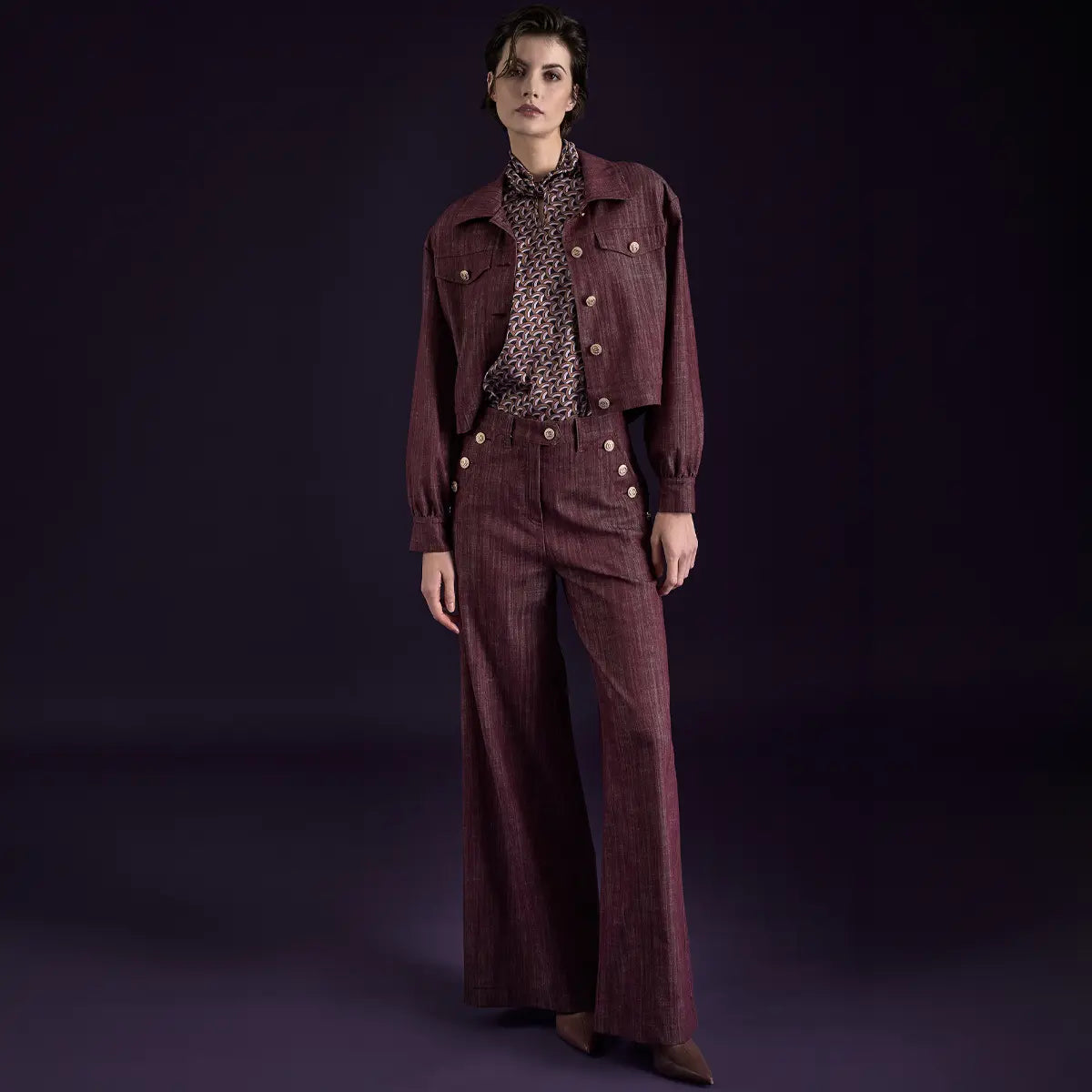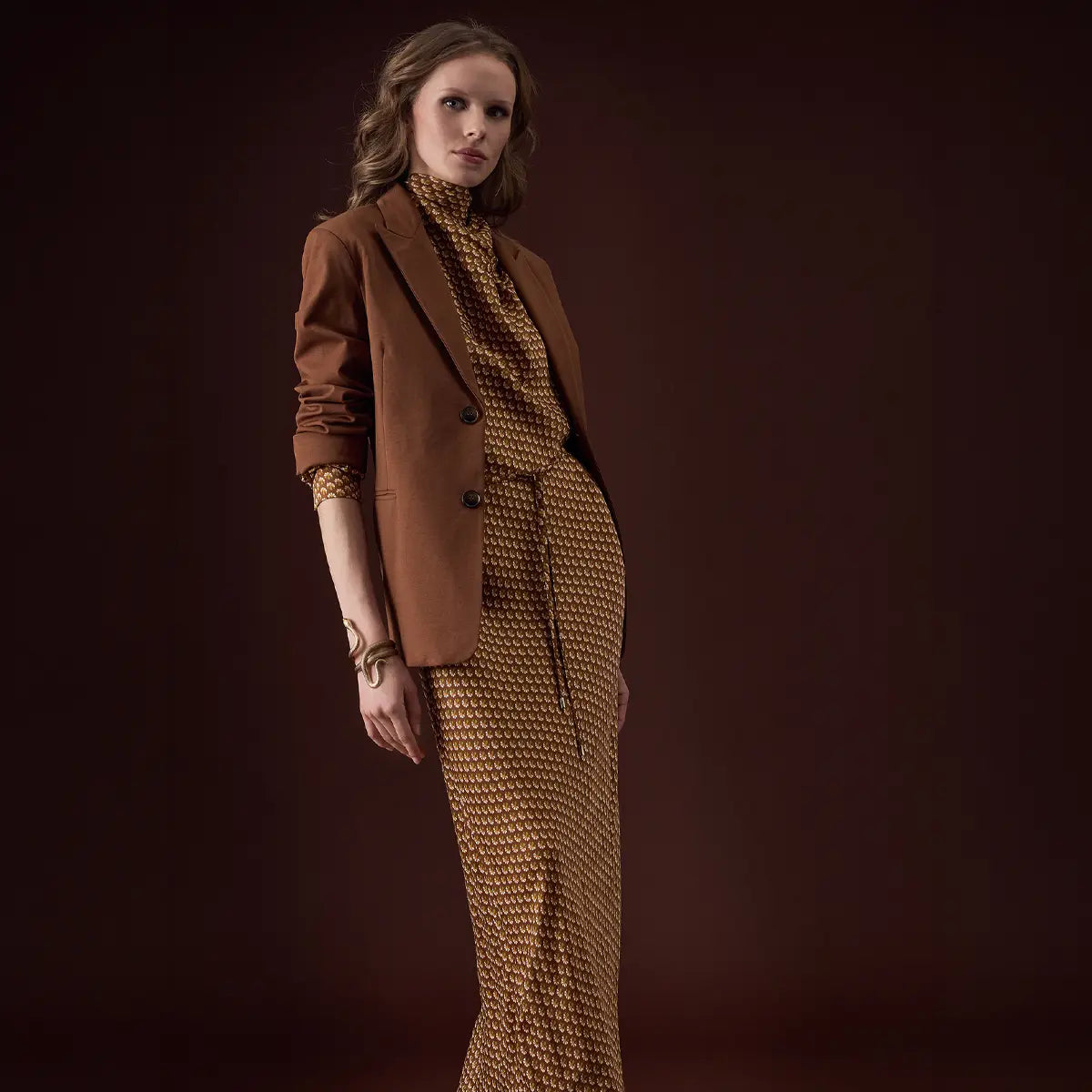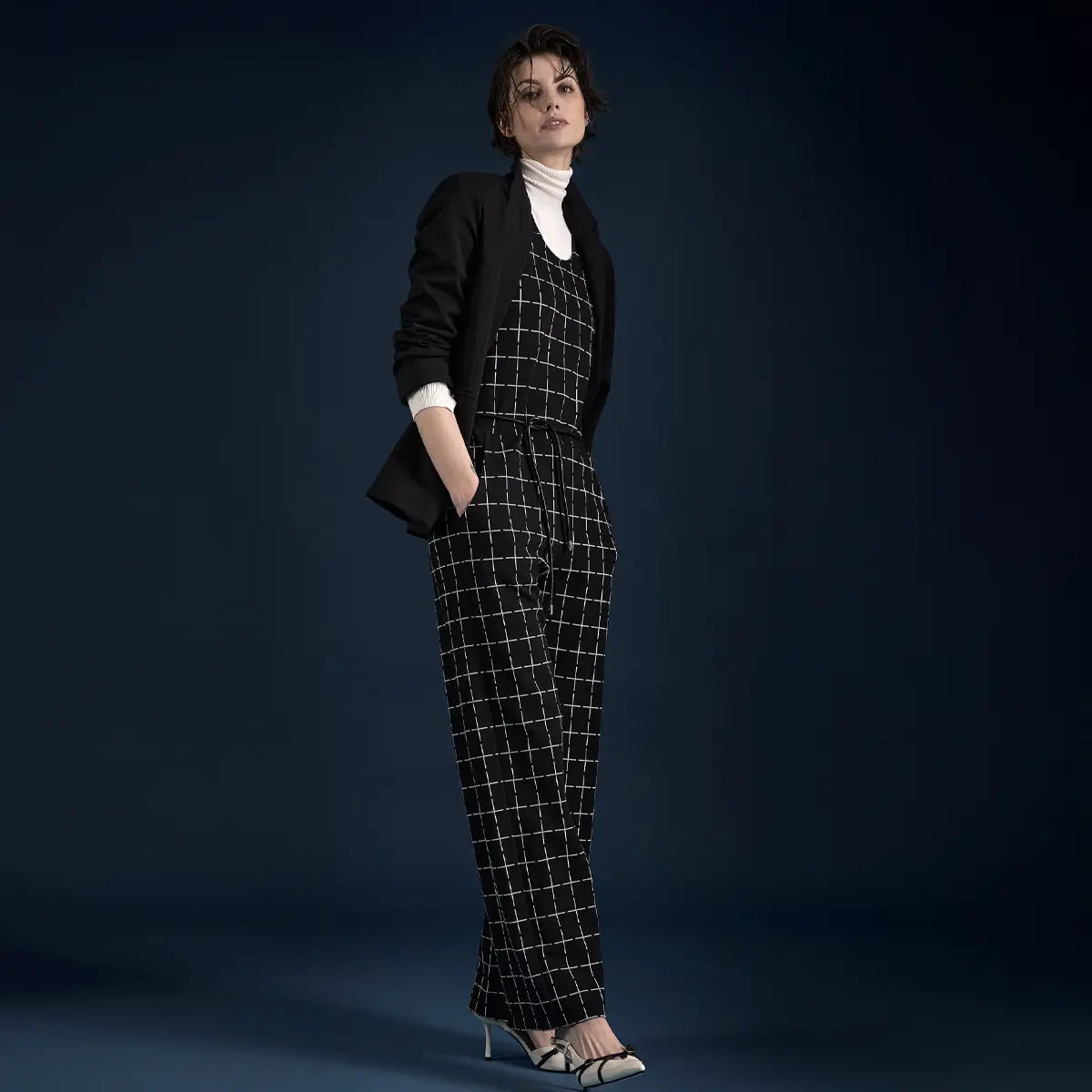


There is hardly any other fashion style for which a single garment is as emblematic of “power dressing” as the pantsuit. Although women’s pants were already being incorporated into fashion by designers such as Paul Poiret in the early 20th century, it was Yves Saint Laurent who made fashion history in 1966 with his legendary “Le Smoking.”
Inspired by trailblazers like Marlene Dietrich, who confidently wore pants and jackets as early as the 1930s, the pantsuit became a symbol of a new kind of female self-determination. While pants were still widely considered inappropriate for women in many places during the 1950s, the second half of the 1960s marked a social turning point. Power dressing emerged as an expression of emancipation, equality, and professional success—and to this day, it is far more than just a fashion trend. It stands for self-confidence, authority, and the ability to use fashion purposefully as an expression of one’s own personality.

One jumpsuit, maximum impact: cobalt on orange, with a yellow accent—movement as a statement @AI illustration
What exactly is power dressing?
Power dressing, taken literally, is nothing more than a “strong outfit.” But behind that lies the real message: clothing chosen to express feminine strength, self-confidence, agency, and success. Ultimately, then, it’s about empowerment. And that, in turn, can mean something different for every woman. So it would be far too narrow-minded to think of power dressing as something to be worn only in a business setting, because it’s about self-expression—as is always the case in fashion.
Power Dressing Through the Ages
Power dressing emerged from women’s desire to use clothing to project authority, competence, and social participation. Even in ancient Rome, clothing served as a status symbol—for example, through colors like gold or violet, which were reserved for certain social groups. In the 1970s, the concept gained new relevance as more and more women pursued professional careers and asserted themselves in work environments that had previously been male-dominated.
As a result of this change, fashion also changed: Playful patterns gave way to pinstripes, dark colors, and clean lines. In the 1980s, power dressing ultimately became the defining style. Wide shoulder pads, statement blazers, straight-cut pants, and masculine-inspired silhouettes symbolized strength, assertiveness, and equality. Style icons such as Princess Diana, Madonna, Margaret Thatcher, and Julia Roberts popularized the look.
Today, power dressing is more versatile than ever. The classic pantsuit remains a central element, but is given a modern twist—oversized, tailored, colorful, made of leather, patterned, or as a statement silhouette. Dresses, jumpsuits, and pencil skirts can also embody power dressing. In an era marked by the gender pay gap, the gender pension gap, and the gender leadership gap, this style remains a fashion statement of self-confidence, empowerment, and presence.
Fashion Elements of Power Dressing
Striking blazers with defined shoulders or shoulder pads
Pantsuits, power suits, and masculine-inspired cuts
Straight-leg or wide-leg suit pants with a high or mid-rise waist
Pinstripes, houndstooth, solid colors, and dark shades
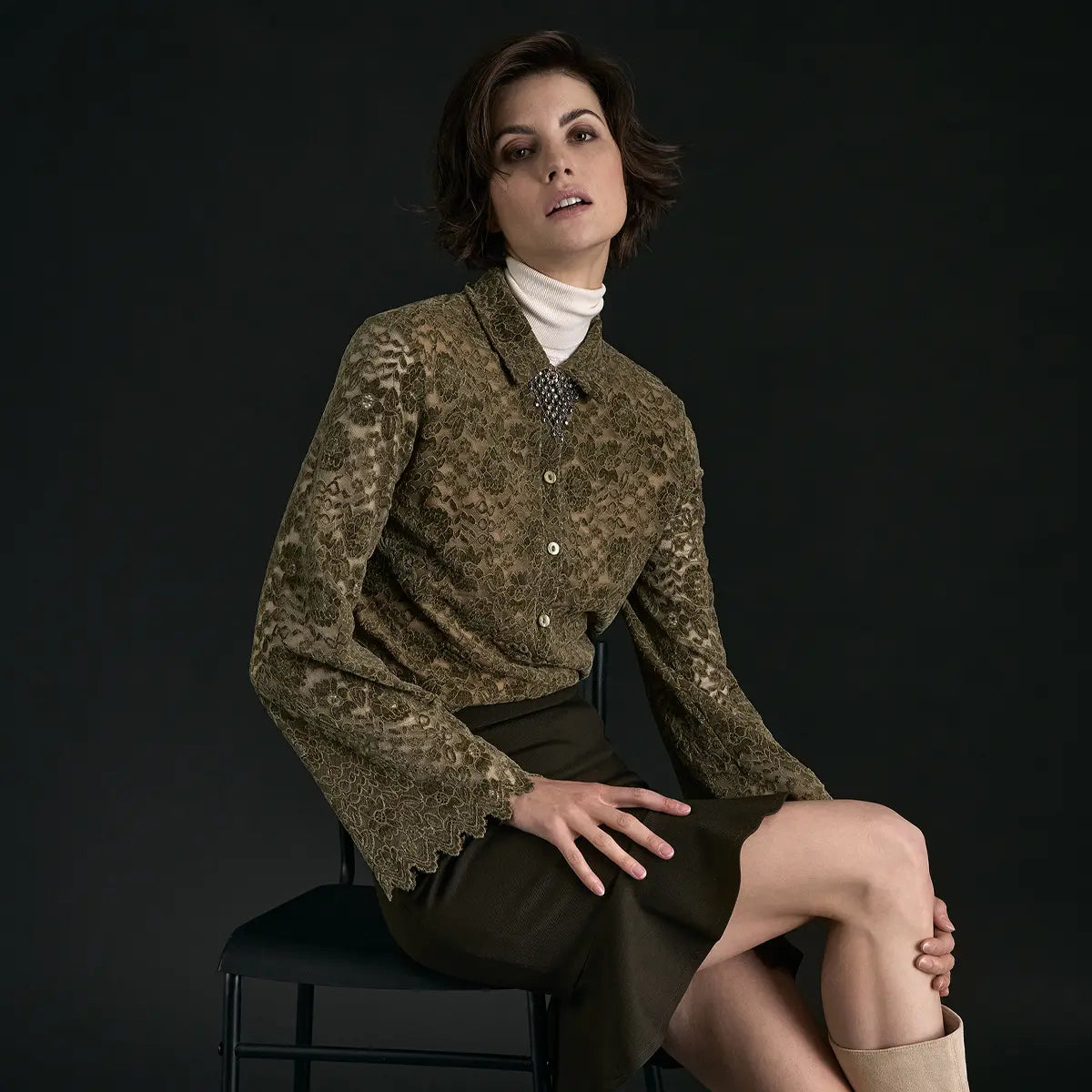
High-necked tops, blouses, or minimalist tops
Structured silhouettes instead of playful, flowing shapes
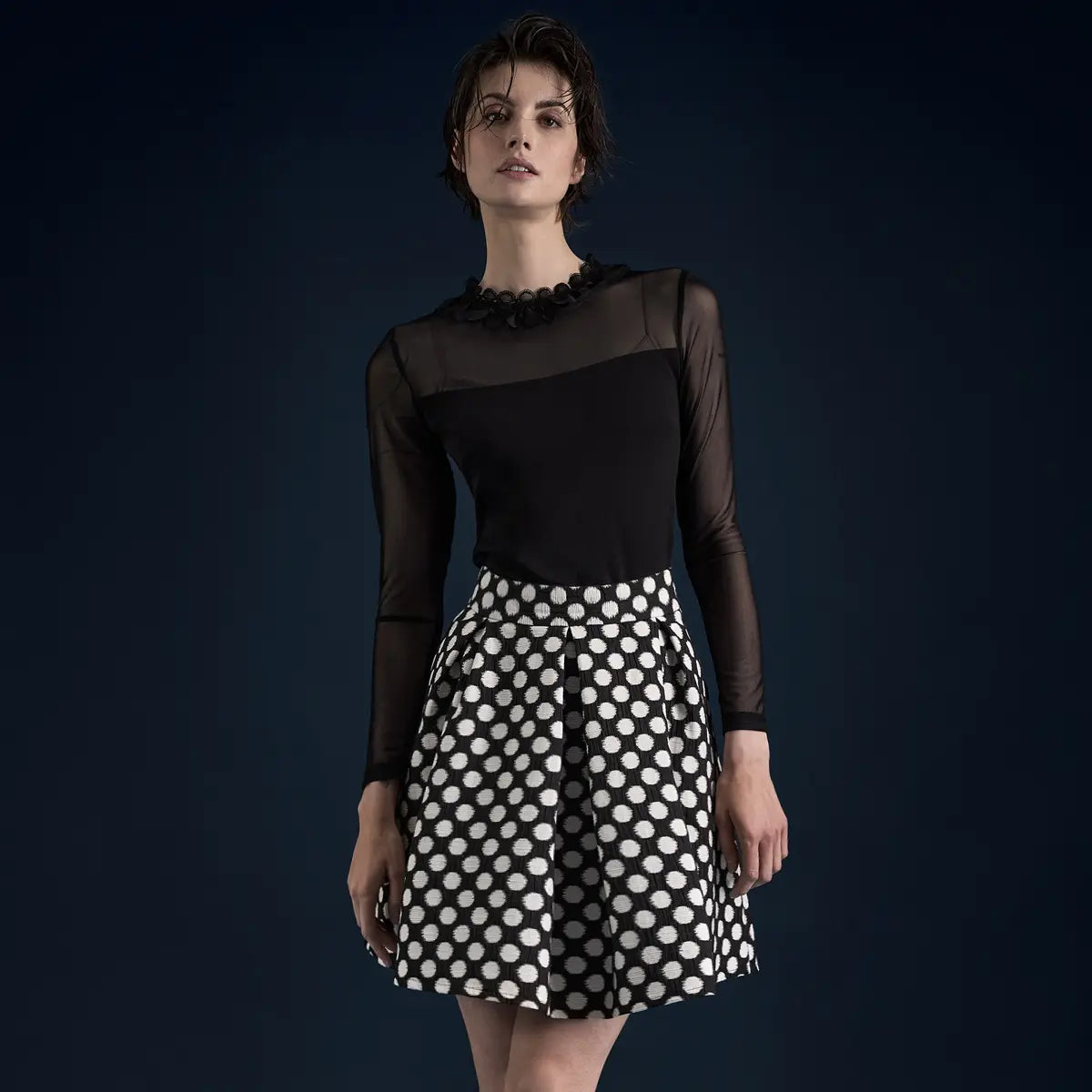
Pencil skirts, jumpsuits, or dresses with clean lines
High-quality materials such as wool, leather, or sturdy suiting fabrics
Shoes such as loafers, slip-ons, Oxfords, pumps, or pointed-toe boots
Make a confident statement with XL blazers, bold colors, or signature details

Power in Color: Pinstripes meet chunky knit meet pleated skirt—a family of reds, boldly layered @AI Illustration
What's Behind It? The Psychology of Power Dressing
Power dressing isn’t just about looking your best; it’s also about feeling confident and comfortable—and thereby projecting self-confidence. Nothing can ruin your presence faster than clothes you’re constantly tugging at to adjust them. Or outfits that make us feel like we’re in disguise rather than being our authentic selves. This is true in our personal lives, but even more so in a professional setting. There, leaders are expected to exude confidence, composure, and level-headedness. The strategic choice of an outfit plays a crucial role in the professional environment. It helps women navigate complex social situations and conflicting expectations—and command the room.
For example, when you’re leading a team meeting, the right look can positively influence not only how you perceive yourself but also how others perceive you. This makes power dressing far more than just a trend. This way of dressing can be seen as a strategic approach to engaging with the world. In a professional context, this influences not only how you perceive yourself but also how others perceive you. After all, only those who are convinced themselves can convince others, inspire them with an idea , or win them over to a strategy. As a result, it affects your self-confidence, your credibility, and ultimately your success within a company.
Perceptions of Competence and Leadership Qualities
Whether we like it or not, it has been proven that clothing (partly) influences perceptions of competence. For example, it is assumed that someone who dresses formally tends to think more abstractly, is more task-oriented, more objective, and more assertive. This is confirmed, among other things, by a study by Sandra M. Forsythe published in the Journal of Applied Social Psychology. Employers were asked how they assessed applicants’ suitability based on their clothing. The result? The more masculine the outfits, the higher skills such as “assertiveness” or “appropriate assertiveness” were rated —and thus the greater the chance of being hired. Casual or particularly feminine looks are often equated with creativity and a certain “flamboyance.” Each of us always makes a statement with our appearance. You can’t help but communicate through your clothing. However, power dressing varies across different industries and corporate cultures. It might look different in an advertising agency than in a corporate setting. Understanding the subtle nuances of your company’s dress code can help you maintain your authority and authenticity.
Striking Power-Dressing Looks
When putting together your power dressing look, pay attention to your color choices as well
Colors have a psychological effect:
- Black: Conveys sophistication and authority—popular in leadership contexts
- Red: Conveys energy and a positive spirit—ideal for presentations
- Orange: Stands for enthusiasm and innovation—inspires excitement
- Yellow: Symbolizes creativity and optimism—for industries where creativity is essential
- Blue: Conveys professionalism and reliability—builds trust
5 Tips for Your Personal Power Dressing & Personal Branding
Invest in high-quality clothing that fits perfectly and flatters your body type.
Stay true to your style, maintain professionalism, and create your own brand.
Choose colors that align with your personal brand.
Choose a comfortable outfit that feels good all day long.
High-necked tops, blouses, or minimalist tops
Use accessories sparingly, as simplicity is often perceived as professional.
Power Dressing: Dos & Don’ts
Choose clothes that fit well
Highlight Your Own Style Professionally
Combine neutral tones with accent colors
Prefer clean cuts
Wearing a blazer
Minimalism Is Key
Dress authentically; don't "dress up"
Well-groomed appearance
Pumps, loafers, ankle boots, sneakers
Don'ts
Overdressing
Fabrics that wrinkle or look cheap
Casual, Relaxed Outfits
Mini dresses, sheer tops, or low-cut necklines
Bright Colors
Wild Designs
Tight-fitting clothing
Heels that are too high
Accessory Overload
Ignoring the company culture

Christine Schmitz
My love for fashion and communication led me to Ana Alcazar—having cut my teeth as a copywriter and concept developer in traditional advertising, I’ve been writing for our Munich-based designer label for over 10 years. On the editorial team, I’m responsible for all corporate topics, and I also focus on current trends and my passion: gender equality.
Between Image and History
Sometimes a story needs more than a photo can convey. That’s why some of the images in this article were created using artificial intelligence (AI)—curated, inspiring, and always in the spirit of “Wear your Story.” The AI-generated images are clearly labeled next to each photo.