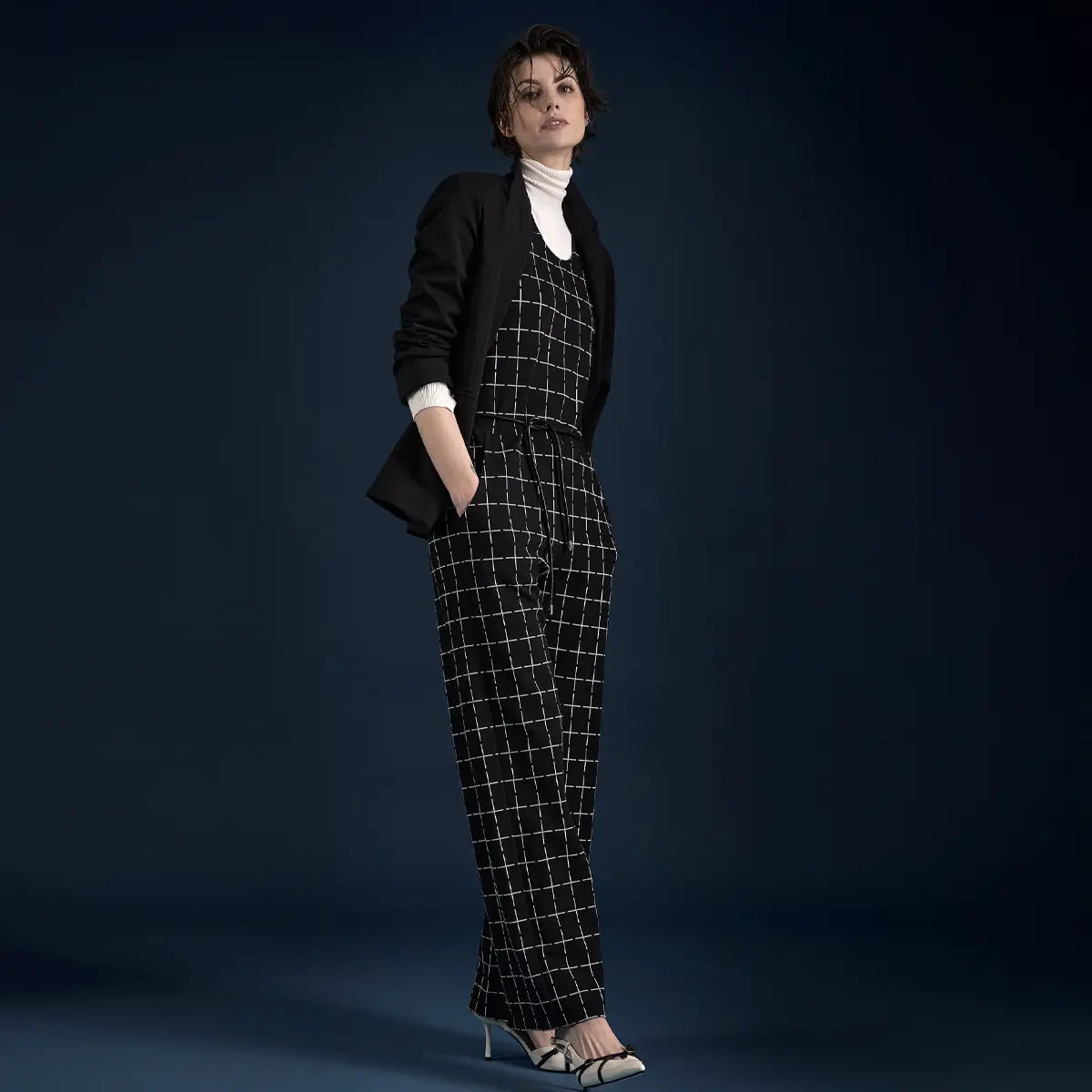


Bauhaus, Art Deco, jazz, and glamorous parties—the “Golden Twenties” represent a new generation of women: emancipated, free from previously accepted social norms, more independent, and provocative.
A subculture that symbolized female emancipation, sexual self-determination, self-actualization, and a hedonistic lifestyle. After the war years, there was also a growing desire to “live in the moment.” The flapper movement developed as a result of women’s emancipation, as they challenged traditional social norms in this way. 100 years later, this distinctive style of dress is experiencing a revival: Welcome back, flapper style and flapper girls.
The glamour of a new attitude: bold, expressive, and impossible to miss
Back then, women celebrated their independence with a new look —in many countries, they had finally been granted the right to vote. Fashion reflected this new sense of self, thereby bringing about lasting changes in style. No more corsets, short skirts, short hair, and wide, sweeping fringes on the hems of straight-cut dresses—all expressions of rebellion against a rigid social order and a celebration of newly won freedom in Gatsby-style dresses. Just like the exuberant Charleston dancing and cocktail drinking in smoky clubs in Berlin. The ideal of beauty also shifted toward more androgynous bodies.

Beaded fringe, feather headband, golden light—that’s what Gatsby glamour feels like for evening wear @KI-Illustration
What does “flapper” actually mean?
The term cannot be derived on a one-to-one basis; it has an onomatopoeic component. “To flap” can also mean “to flutter” in English. It’s possible that it derives from a comparison with young birds that “flutter” their wings. It’s also conceivable that the “fluttering” of loosely fitting fringed dresses with every movement could be the origin.
What defines the flapper look?
The popular, quintessential 1920s silhouette was known as “La Garçonne” —androgynous, slim, boyish. Distinctly feminine lines disappeared from fashion until the early 1930s. Flapper dresses, which were usually no longer than knee-length, were not fitted at the waist but fell straight down. They were mostly sleeveless and loose-fitting. Art Deco elements or pearls were often featured on the dresses. The shoulders were cut asymmetrically, diagonal lines were in vogue, and back cutouts were accented with thin straps over the shoulder blades. Glittering sequins were also a common sight.
Discover flapper-style dresses
The Flapper Comeback—A Reflection of the Times or a Coincidence?
Right now—100 years later—the flapper trend is making a comeback on the runways of Massimo Duti, Ferragamo, Valentino, and Balmain. Dresses, coats, and blouses feature fringe, which breaks up simple silhouettes and creates plenty of movement and a swirling effect when walking. What stands out are the extremely clean and simple cuts, which appear almost minimalist. It’s the fringe that gives them a vibrant edge. Important to know: The longer the fringe, the more dramatic the silhouette. Knee-length for a light, flowing look; floor-length for maximum impact. Yet the designers’ creations are no accident; they are an expression of a newly awakened longing for a pure life in times of global crises and challenges. The world is in turmoil, and fashion responds with movement and lightness to lift the burden from our shoulders—if only for a moment. And to celebrate the moment and life itself.

A long-sleeved bow-neck blouse pairs with a flowing fringed skirt in deep wine red—a bold, modern look in the flapper style @KI-Illustration
More avant-garde than romantic—here’s how the retro style is being reinterpreted
Straight lines instead of slanted angles, minimalist shapes instead of opulence, and many surprising ways to incorporate long or short fabric fibers—the runways are filled with dynamic threads. Fringes come in various styles and are made from all kinds of materials—from crocheted and knitted designs to leather, delicate silk, or sturdy cords. The new flapper trend drapes fringe over the shoulders of jackets or coats, uses it to break up long skirts starting at the knee, or adorns nude dresses with it. They come floor-length, sporadically placed, or densely clustered, so that movement makes them appear like “fluid” fabric. And while they’re rarely seen on evening gowns, they’re ubiquitous in everyday wear. Midi dresses and jackets are now capitalizing on the dramatic effect of fringe, which adds texture and movement to the design. Parties were a thing 100 years ago; today, these long strands are our daily companions.
Flapper Reimagined
Flapper by Day and by Night
While in the 1920s, flapper dresses were reserved exclusively for flowing party gowns, today they can’t be categorized under any specific style. Everything flows—especially the boundaries between styles. The long strands have only one goal: to set the look apart from the mainstream—no matter the style or time of day.
How to Style Everyday Looks: Gatsby Style Reimagined
Choose a key piece with long fringe—such as a simply cut coat—and give a basic outfit of pants and a shirt a special edge.
Wear a slim-fitting dress with ruffled details and pair it with high heels for a glamorous occasion
Opt for subtle use of fringe in the office—for example, along the hem of a knee-length skirt or on the sleeves of a delicate knit sweater
Less is more: Even select accessories, such as bags with fringe details or dainty ankle boots, add that essential touch of style

Christine Schmitz
My love for fashion and communication led me to Ana Alcazar—having cut my teeth as a copywriter and concept developer in traditional advertising, I’ve been writing for our Munich-based designer label for over 10 years. On the editorial team, I’m responsible for all corporate topics, and I also focus on current trends and my passion: gender equality.
Between Image and History
Sometimes a story needs more than a photo can convey. That’s why some of the images in this article were created using artificial intelligence (AI)—curated, inspiring, and always in the spirit of “Wear your Story.” The AI-generated images are clearly labeled next to each photo.