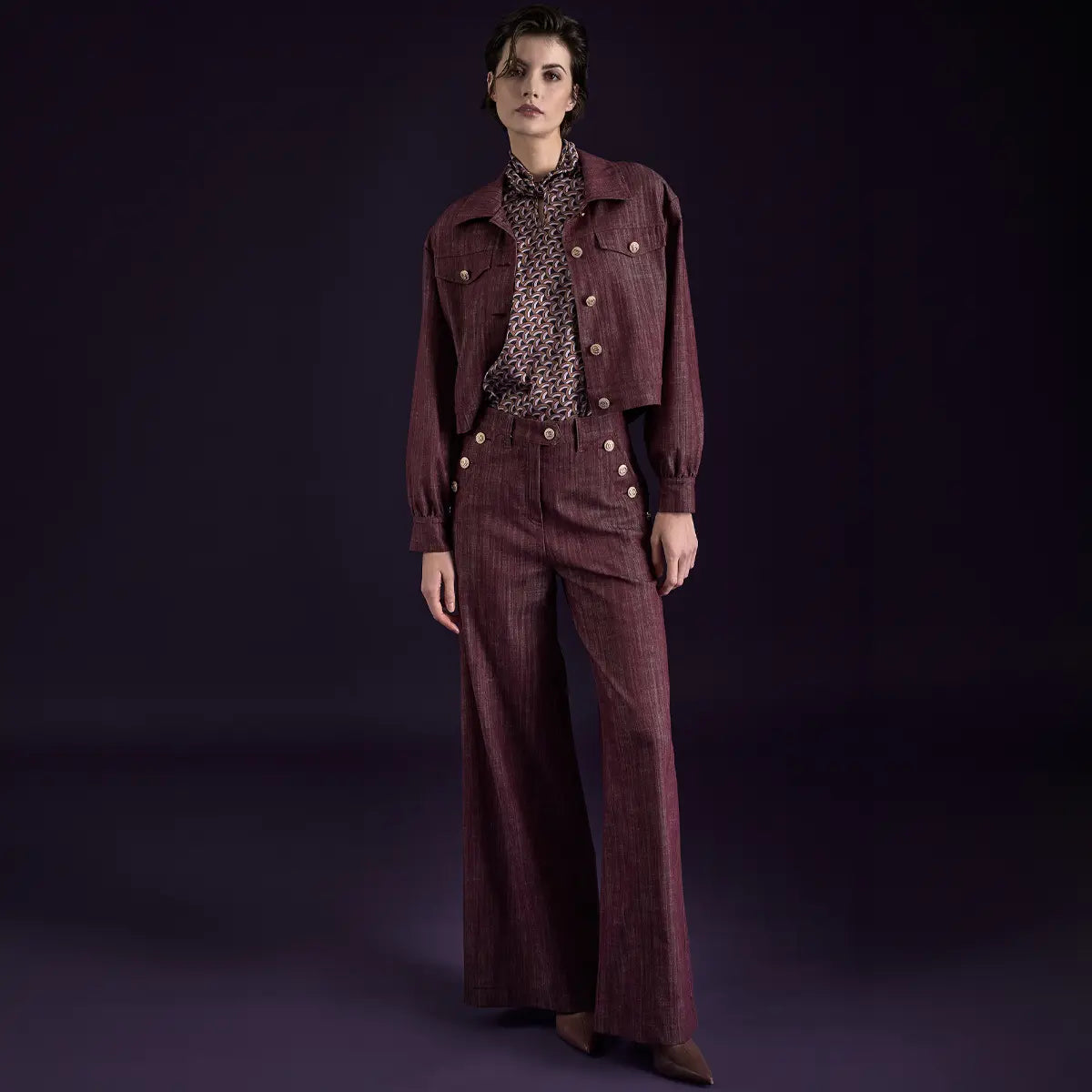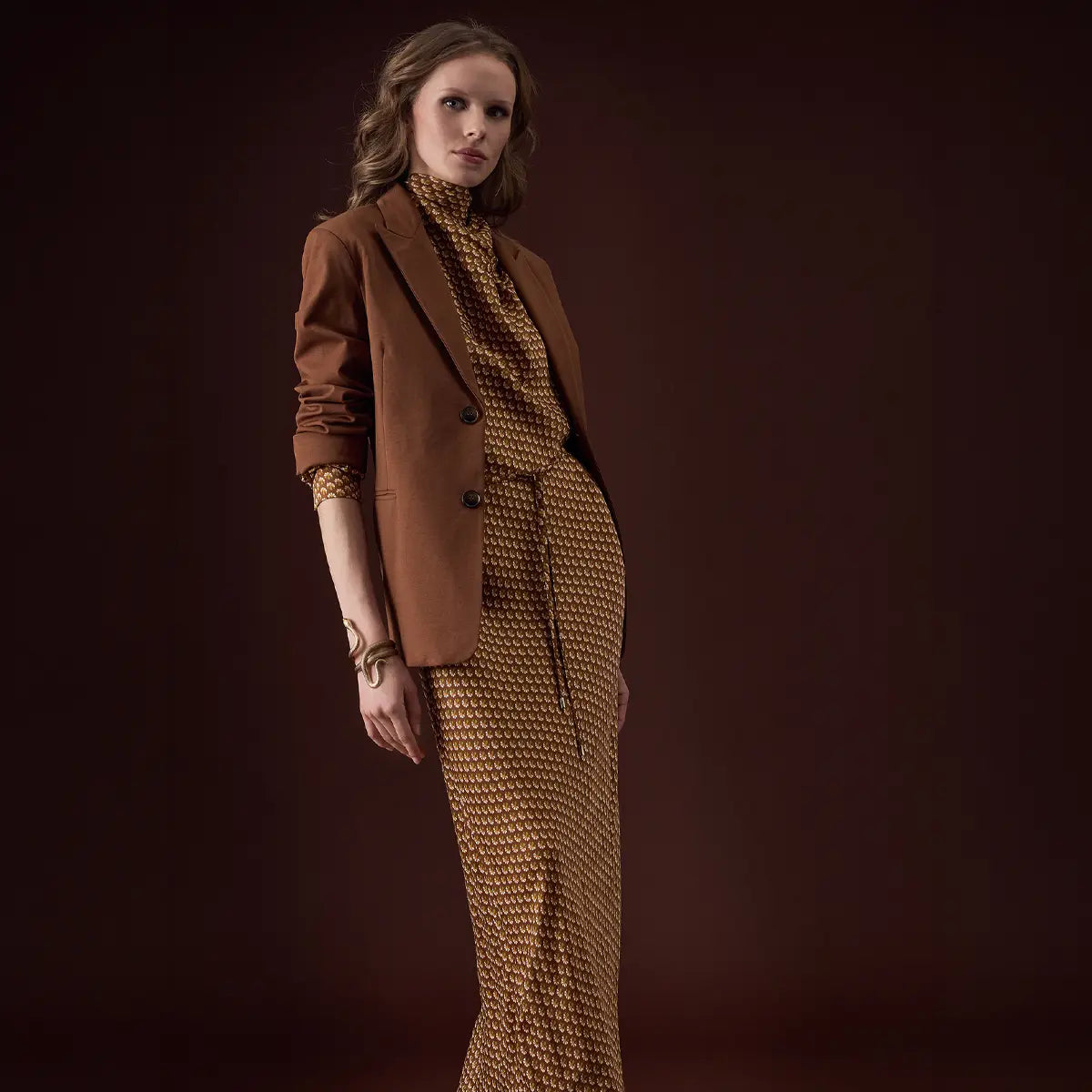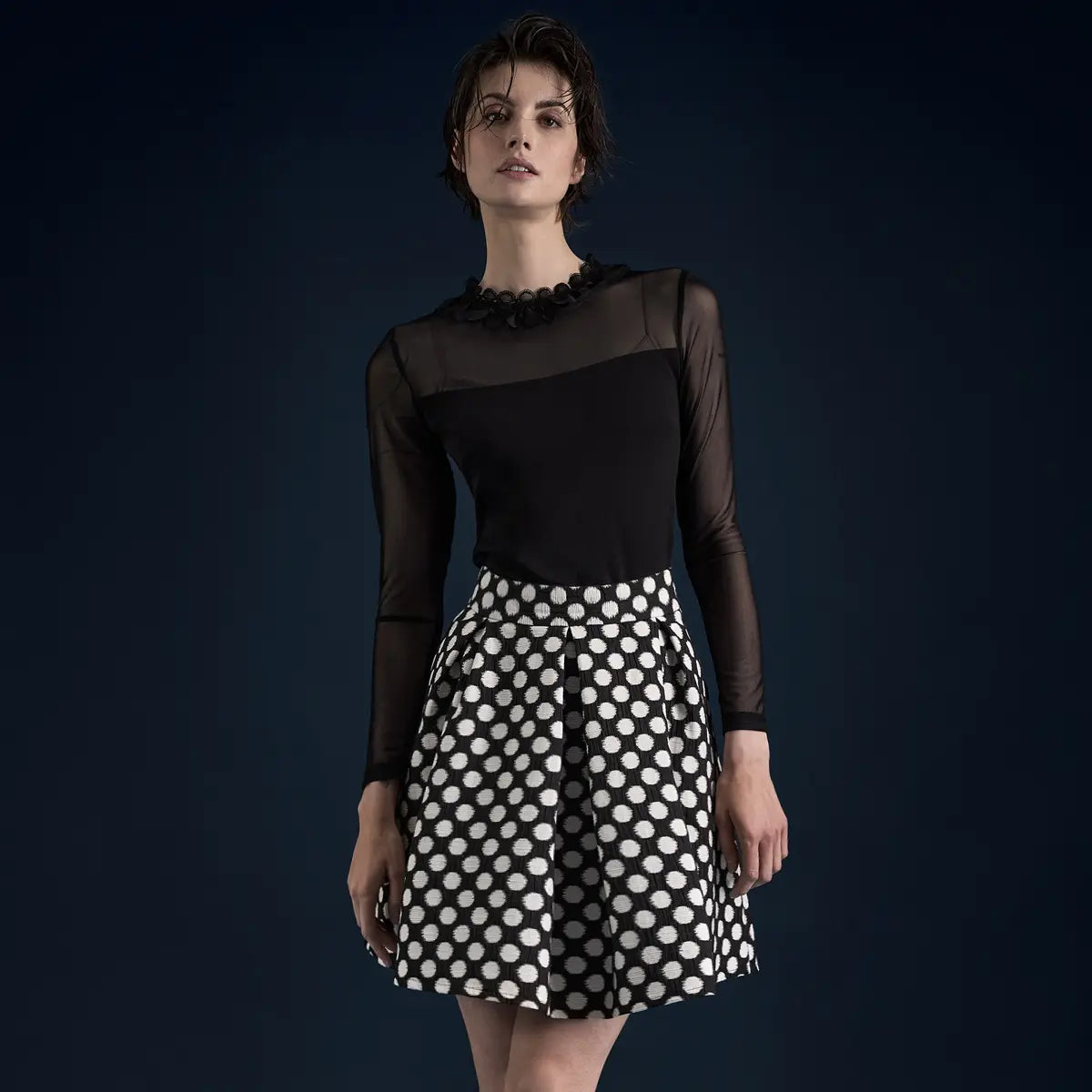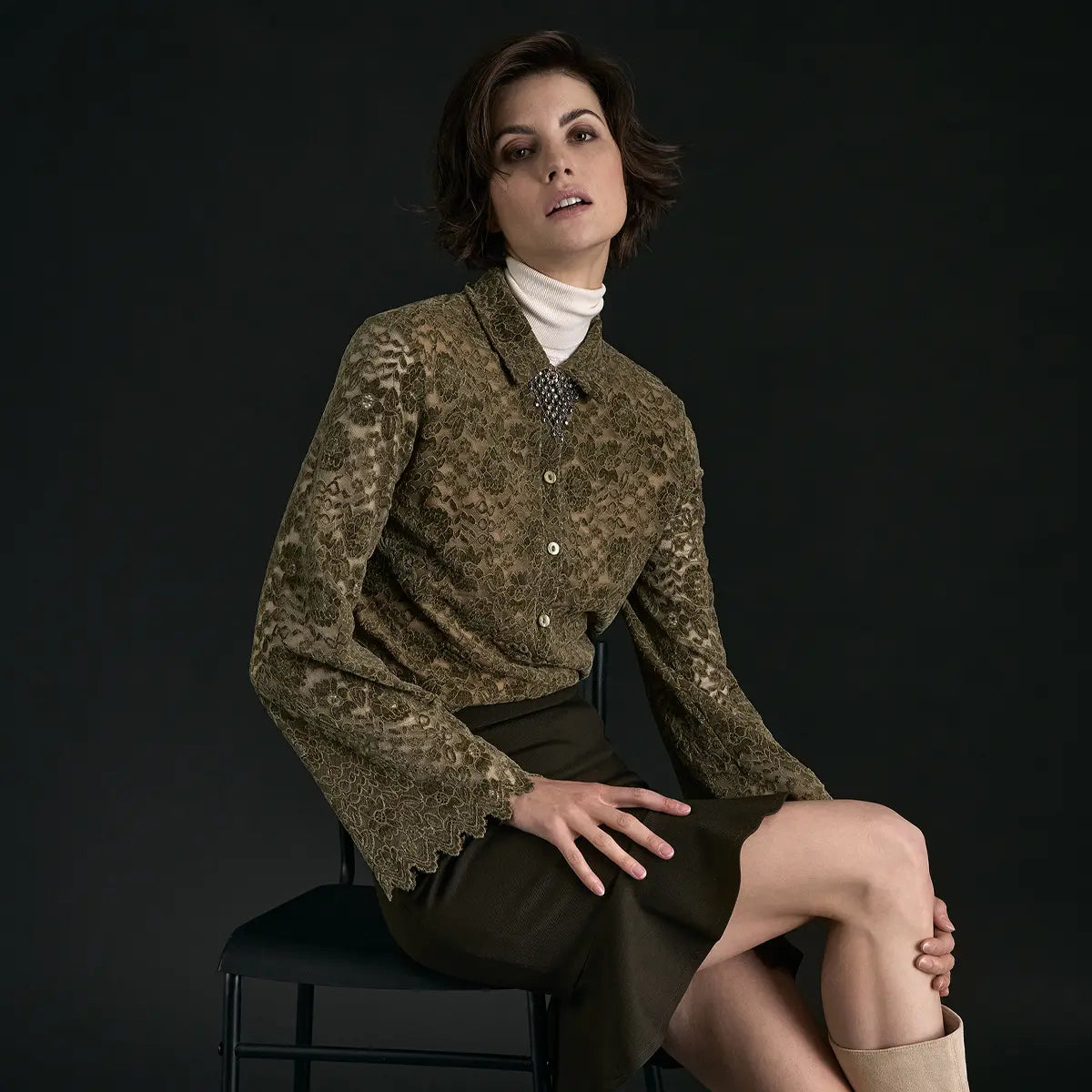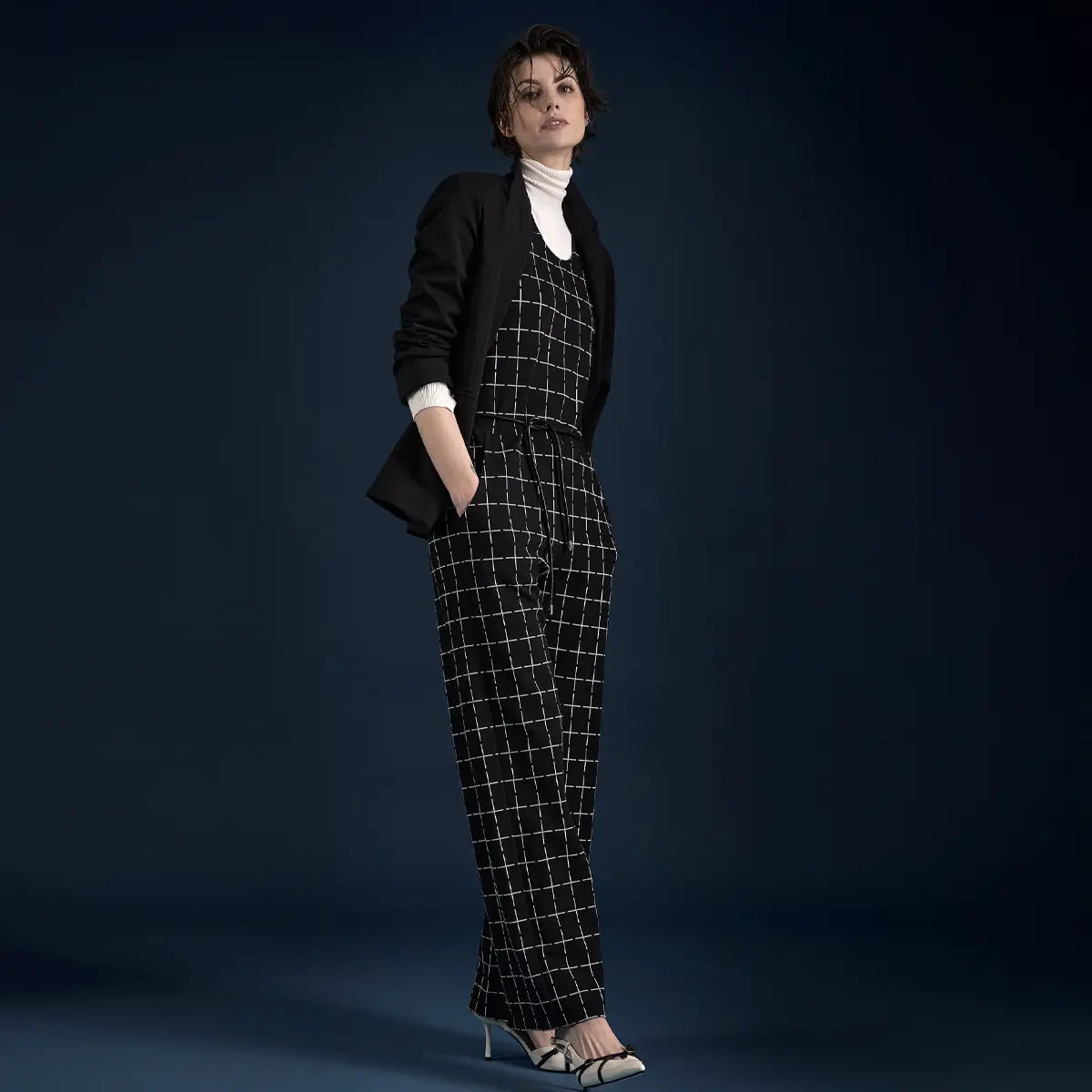


The Pepita pattern is one of the classics among checkered patterns and always looks incredibly elegant, timeless, and simply chic. This small-checkered, high-contrast pattern has been a part of fashion since around the mid-19th century, though the weaving technique used to create it has been known for thousands of years.
In women’s fashion, small-check patterns were a huge hit, especially in the 1930s. Back then, figure-hugging suits in fine-patterned Pepita or houndstooth prints were all the rage: The delicate checkered design looks particularly elegant and chic in its high-contrast black-and-white version, though it was also considered slightly stuffy. In the 1960s, the pattern then experienced a revival—often in bright colors. Feminine 7/8-length pants in the Pepita style were just as trendy as the classic Jackie Kennedy suit with a hat and shawl collar.
Ever since its first major resurgence in the 1930s, clothing featuring the distinctive small-check Pepita pattern has appeared with remarkable regularity in fashion designers’ collections. Scarves, coats, dresses, pants, and jackets in the Pepita style have since become staples of both classic women’s and men’s fashion. Just think of our first Chancellor, Konrad Adenauer, who was almost never seen playing bocce in his free time without his Pepita hat.
Where does the name Pepita come from?
The name "Pepita" likely comes from the Spanish dancer Josefa Durán y Ortega, known as Pepita de Oliva. The Pepita pattern is characterized by small, mostly black-and-white squares connected by diagonal stripes.
However: There isn't even a precise definition of "Pepita" in textile circles. Often, any small checkered pattern is grouped under the term "Pepita," and the distinction from other weave patterns, such as houndstooth or Vichy, is blurred.
Houndstooth vs. Pepita – Differences & Similarities
Caution: Risk of confusion—at first glance, the classic houndstooth pattern and the Pepita pattern look almost identical. You have to look very closely to spot the key differences:
Pepita
In the illustration, you can see the distinctive feature: tiny squares connected only by thin diagonal lines—not jagged edges, but a fine line. Because the pattern is so intricate, it looks almost like a solid color from a distance and can therefore be worn without hesitation in a tone-on-tone look from head to toe.

Pepita: The finer the weave pattern, the more elegant the look
Houndstooth
Unlike Pepita, houndstooth features jagged, diagonal points—which make it appear larger and more graphic. That’s exactly why a single houndstooth piece, such as a blazer or coat, is enough to take center stage, while the rest of the outfit is kept deliberately simple.

Houndstooth: the more graphic, bolder sister of the Pepita
By the way: The pattern that is commonly used today as a synonym for Pepita and houndstooth is actually a combination of the two and is called VICHY. It should not be confused with the Vichy check. The starting point for the diagonal extension here is a diamond rather than a square.
Vichy—the hybrid
Vichy is the larger, more distinct version: The checks are set on a diamond-shaped grid, making them stand out more clearly than in the Pepita pattern. On generously cut garments—coats, wide-leg pants—this pattern gets the space it needs to really shine.

Vichy: Generous repeat for generous cuts
How to Style a Pepita Pattern – Here's How!
When it comes to styling, the Pepita pattern is really easygoing—the design is so timeless and understated that you can wear it with (almost) anything. However, precisely because Pepita checks are traditionally quite small, it’s best not to go overboard with patterns. “Keep it simple” is the motto, because this pattern looks best on its own.
Use Pepita as a statement pieceand keep the rest of your outfit deliberately simple.
Pair the pattern with high-quality materials like leather, cashmere, or wool for a modern, luxurious look.
Wear Pepita as an accent piece with monochromatic outfits in black, white, or cream.
Play with proportions by pairing a houndstooth blazer with wide-leg pants or flowing skirts.
Incorporate strategic pops of color in red, burgundy, or cobalt blue to add a touch of style.
Pair Pepita with subtle stripes or delicate check patterns for a sophisticated mix of patterns.
Enhance the look with minimalist accessories so that the iconic pattern can really shine.
Styling Do's & Don'ts for Your Pepita Look
Pair the houndstooth pattern with simple basics
Spice up the black-and-white look with colorful highlights
For an all-over look: Pay attention to the details and opt for simple jewelry and high-quality materials!
Don'ts
Don't mix houndstooth patterns with other patterns, unless you want to create an extra eye-catching look
Opting for cheap prints instead of high-quality woven fabrics: Keep it classy!
Choose checks that are too large—the Pepita look works best with small checks
You Ask, We Answer – Frequently Asked Questions About the Pepita Pattern
What is the difference between Pepita and houndstooth?
In the houndstooth pattern, the corners of the squares taper horizontally and vertically into jagged edges, while in the Pepita pattern, the squares are connected by narrow diagonal lines. On woven fabric, however, this difference is barely noticeable, which is why both terms are usually used interchangeably in everyday language. There is no official definition, even among textile experts.
What colors go well with the houndstooth pattern?
Any color generally goes well with black-and-white houndstooth. Combinations with white, cream, beige, or gray look the most elegant. If you want to add a pop of color, go for bold red, pink, or cobalt blue—ideally in a single piece like a coat, bag, or scarf, while keeping the rest of your outfit monochromatic.
Doesn't the houndstooth pattern look old-fashioned?
That depends almost entirely on the cut. In fitted suits, the Pepita pattern can quickly look conservative, but in modern silhouettes, it doesn’t: an oversized blazer, a voluminous coat, or wide-leg pleated pants transform this classic into a contemporary look. It’s also crucial that the pattern stands on its own and isn’t combined with other patterns.

Christine Schmitz
My love for fashion and communication led me to Ana Alcazar—having cut my teeth as a copywriter and concept developer in traditional advertising, I’ve been writing for our Munich-based designer label for over 10 years. On the editorial team, I’m responsible for all corporate topics, and I also focus on current trends and my passion: gender equality.
Between Image and History
Sometimes a story needs more than a photo can convey. That’s why some of the images in this article were created using artificial intelligence (AI)—curated, inspiring, and always in the spirit of “Wear your Story.” The AI-generated images are clearly labeled next to each photo.