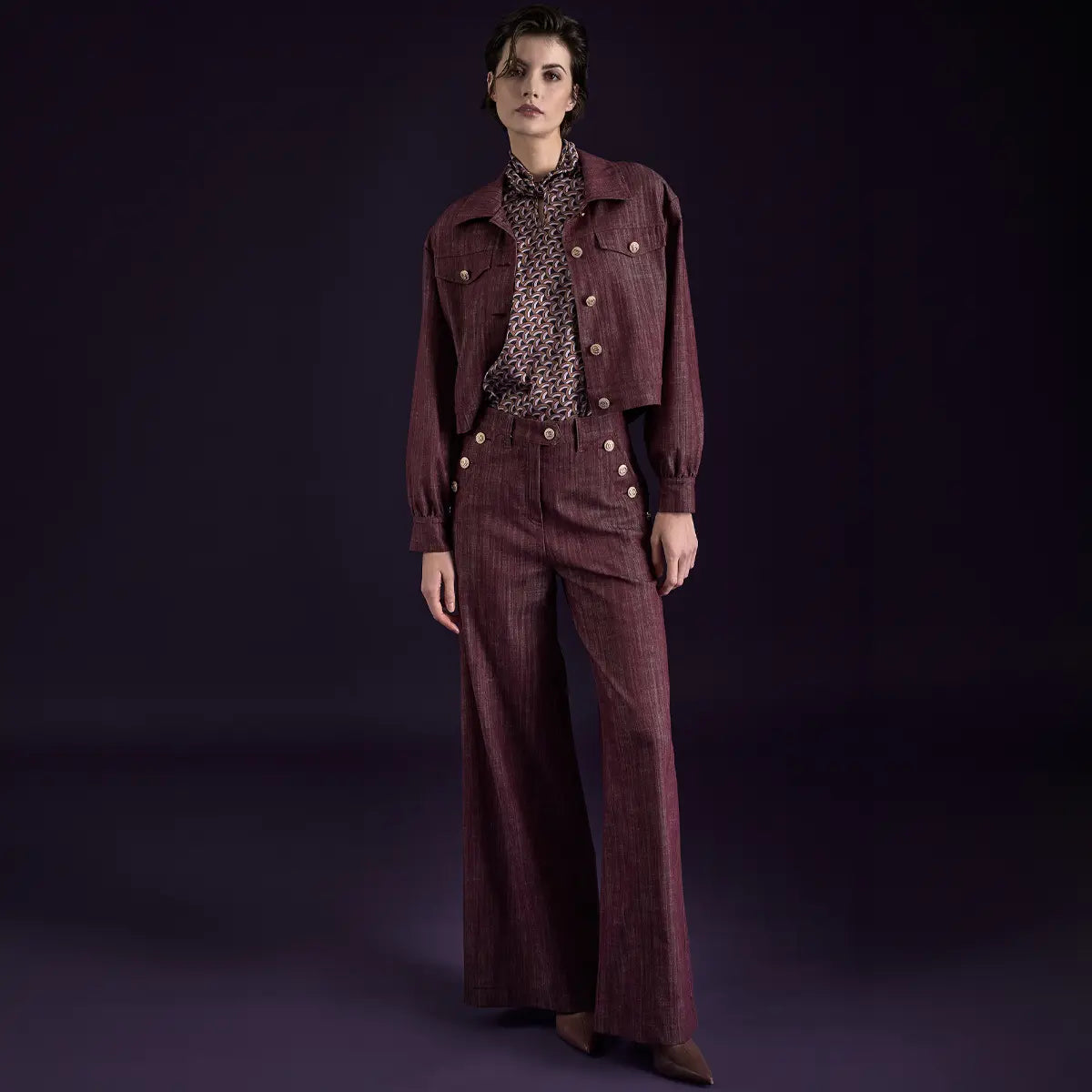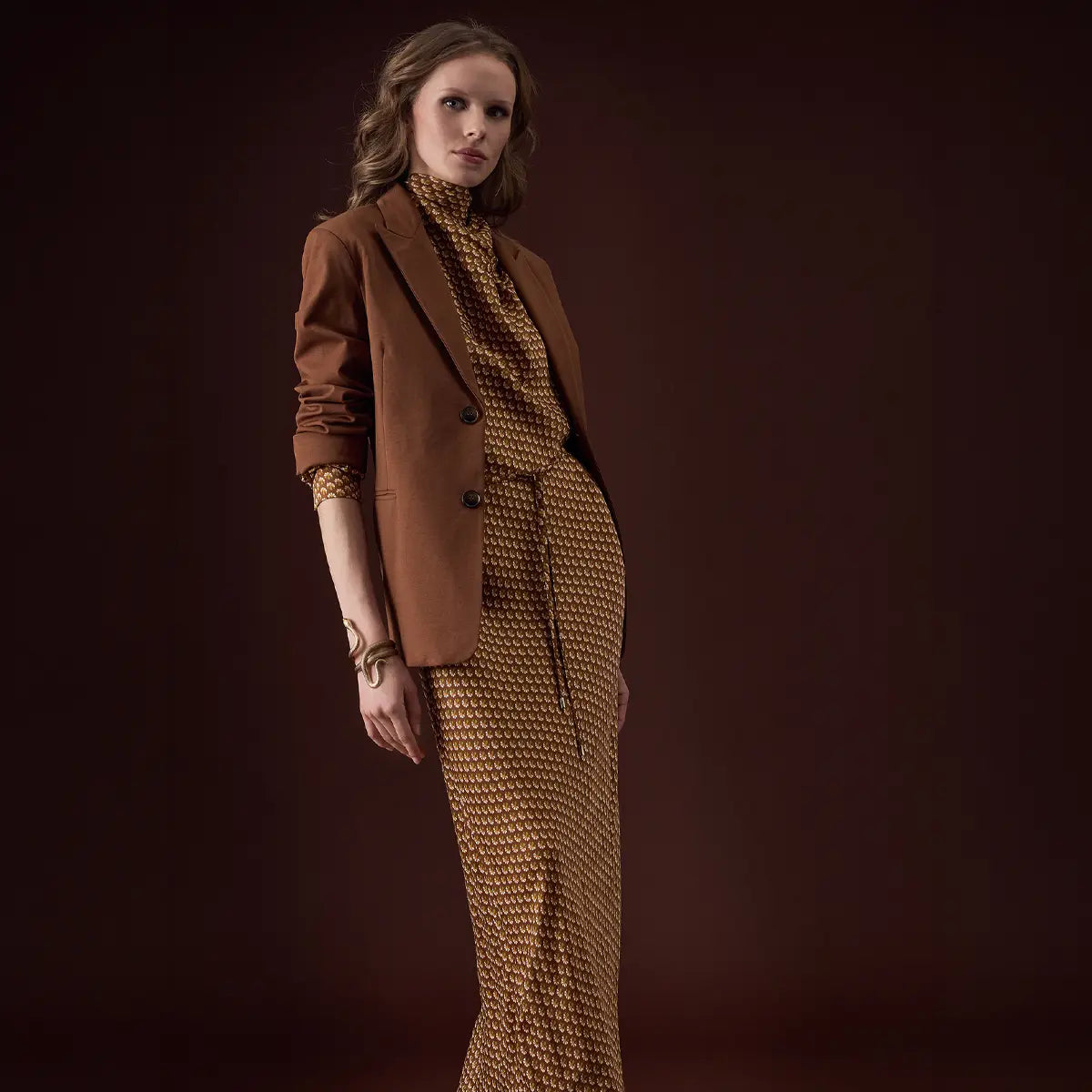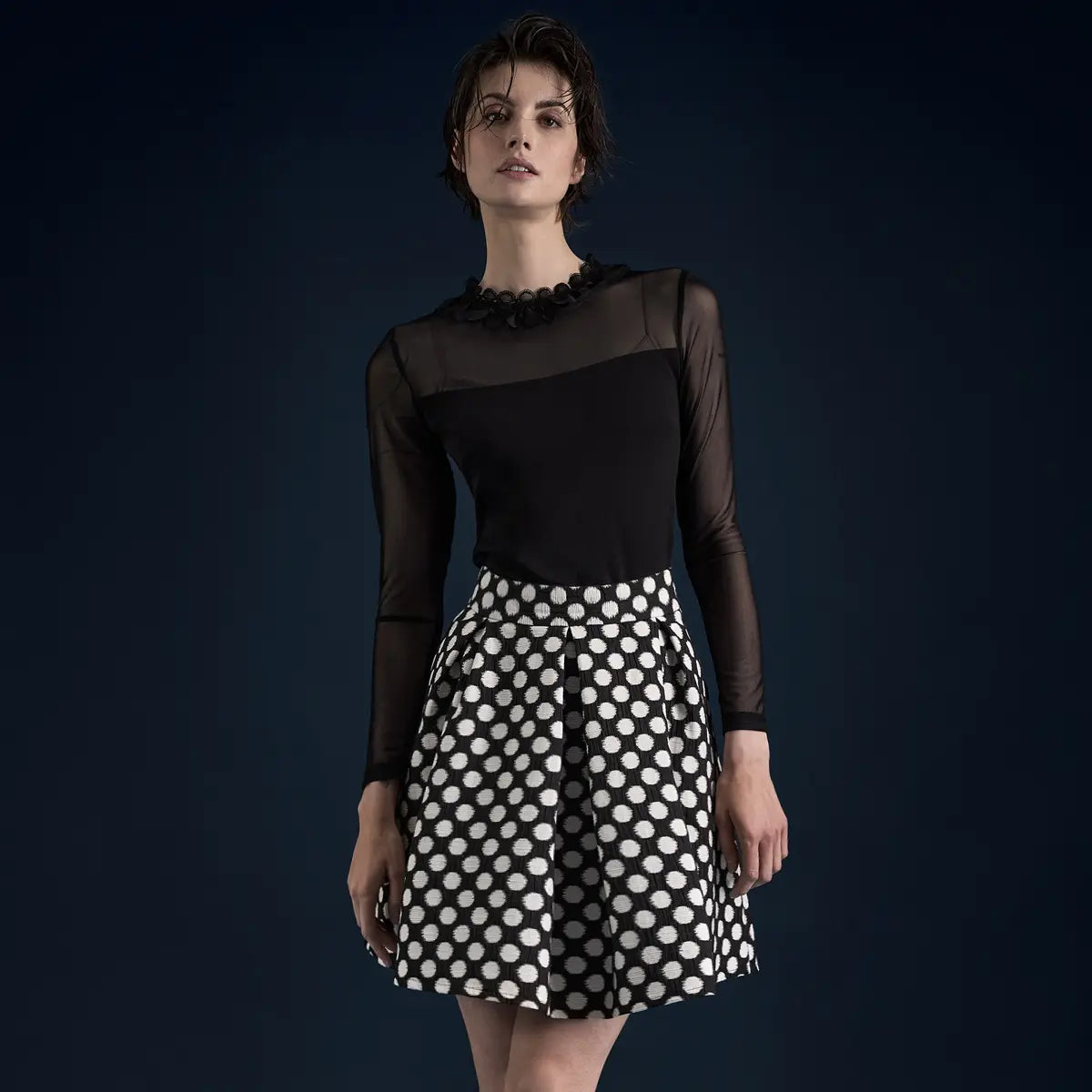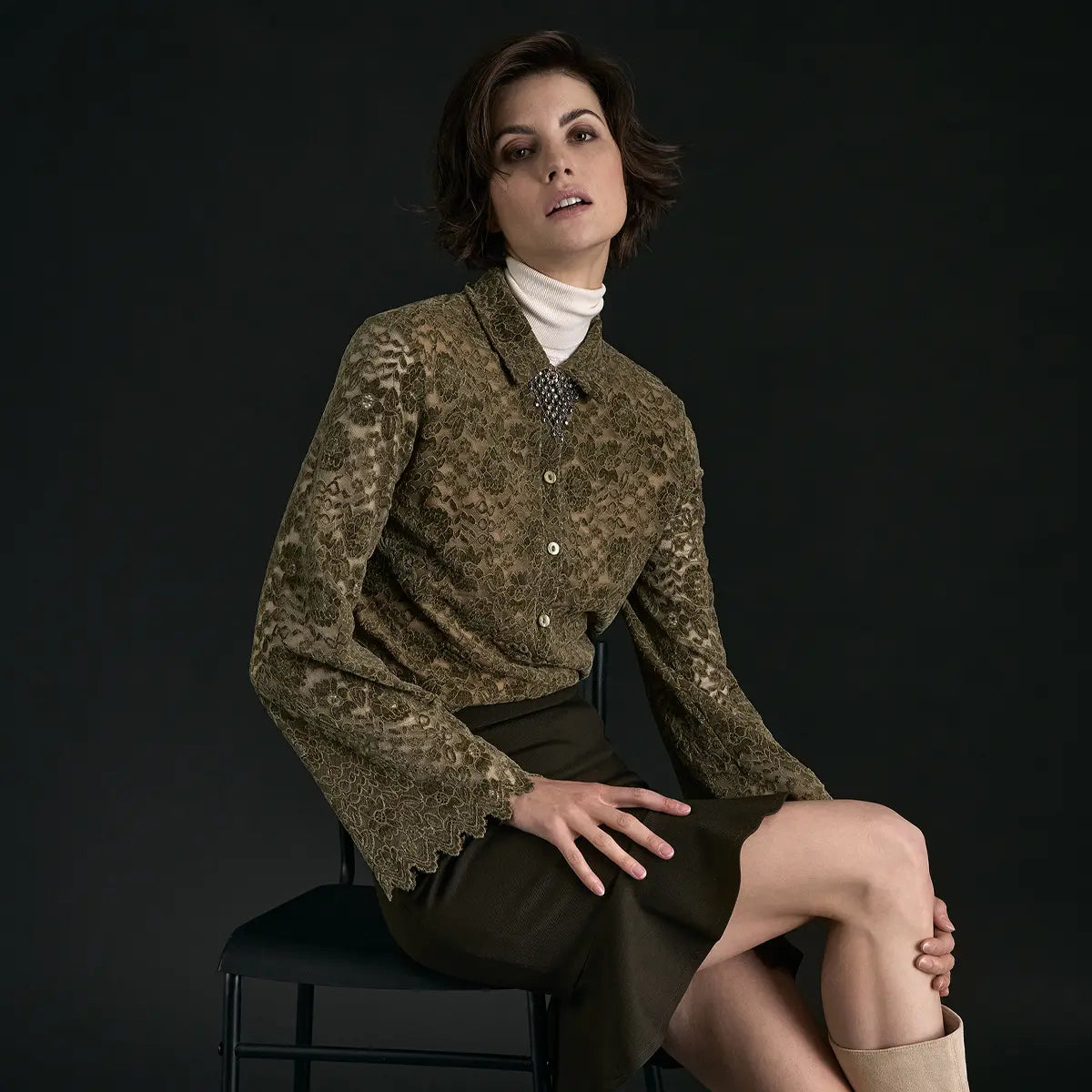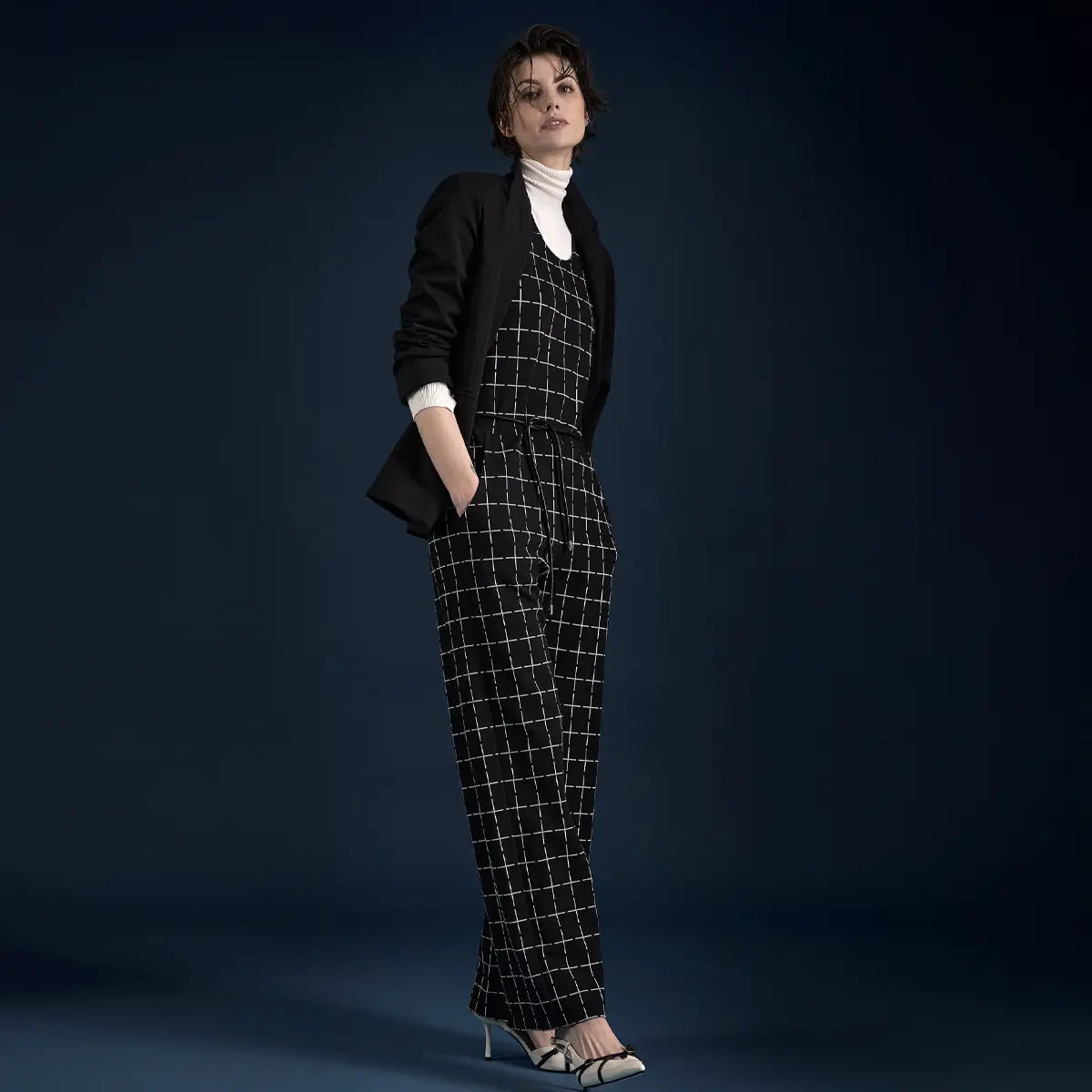


Beauty comes in many forms—and each has its own merits. When you know your body type, you can make more informed fashion choices and highlight your best features instead of clinging to rules. By asking yourself four questions in front of the mirror, you can figure out which body type best matches yours—and get styling ideas that flatter your figure. Regardless of your clothing size.
In this guide:
From A to Z – The Five Body Types in Fashion
Curvy A-type, athletic V-type, straight H-type, feminine X-type, or round O-type: These five letters describe the proportions of a figure—that is, how volume, silhouette, and visual center of gravity are distributed. They’re not meant to pigeonhole anyone, but rather to serve as a styling guide. As always in fashion, it’s all about balance.
The best part is that every body type—regardless of clothing size—can look its best with the right cuts, lengths, and materials. Here’s how to identify your body type at a glance:
Type A – the pear (triangle): The shoulders are narrower than the hips, the waist is clearly defined, and the hips and thighs are fuller.
V-Type – the apple (inverted triangle): Her shoulders are wider than her hips, her upper body is more muscular, and her legs are long and slender.
H-Type – the Rectangle (Column): The shoulders, waist, and hips are about the same width and form a straight, clean line.
X-Type – the Hourglass: The shoulders and hips are about the same width, the waist is clearly defined and narrow—curvy and well-proportioned.
Type O – the Orange (Round Type): A fuller midsection with a prominent bust, paired with slimmer arms and legs.
Don't see yourself 100 percent in any one type? That's completely normal—hybrids are the rule rather than the exception. Just take the test: It'll show you your tendencies and the styles that go with them.

Fashion isn't about size: With the right cuts, every body type can look its best. Wear your story. @KI-Illustration
Self-Test
What body type am I?
Four questions in front of the mirror—and you'll know which cuts flatter your figure. It's about trends, not perfection.
Question 1 of 4
How do your shoulders look compared to your hips?
Where do you first notice volume visually?
Is your waist clearly visible?
How would you describe your overall silhouette?
Your result
–
–
An Overview of the Five Body Types
Didn't take the test? Just browse through the types—hybrids are completely normal.
Type A · the bulb
· Triangle A-Line
Features
The shoulders are narrower than the hips, the waist is clearly defined, the hips and thighs are fuller, and the upper body is more slender.
That balances your figure
- Add volume: ruffles, flounces, puff sleeves, eye-catching collars
- Light shades on top, darker shades on the bottom
- Flared skirts and bootcut pants create balance
Probably not
Tight pencil skirts without anything to balance them out on the upper body.


V-Type · the apple
inverted triangle
Features
Her shoulders are wider than her hips, her upper body is more muscular, her legs are long and slender, and her waist is only slightly defined.
That balances your figure
- Draw the eye downward: patterns, color, and details at the hips and legs
- A-line skirts and wide-leg pants
- V-necklines and wrap blouses
- Off-the-shoulder design and wider straps
Probably not
Shoulder pads and gathers in the shoulder area.
Matching Styles


H-Type · the rectangle
the pillar
Features
The shoulders, waist, and hips are about the same width and form a straight, clean line. The waist is not very defined.
That balances your figure
- Defining the waist: fitted blazers, belts, empire-waist styles
- Layering for texture, paperbag waistband for interest
- Choose flowing fabrics
- Show off your legs in a mini skirt or shorts
Probably not
Loose, straight cuts with no waist definition at all.
Matching Styles


X-Type · the hourglass
Hourglass
Features
The shoulders and hips are about the same width, and the waist is clearly defined and narrow. A balanced, curvy silhouette.
That balances your figure
- Show Off Your Waist: High-Waisted, Pencil Skirt, Wrap Dress, Belt
- Figure-hugging cuts
- Fabrics with a little stretch follow the contours of your body
Probably not
Boxy, oversized cuts with no waist definition whatsoever.
Matching Styles


O-Type · : The Orange
the round type
Features
A fuller midsection with a prominent bust, paired with slimmer arms and legs. The shoulders are often narrower than the waist.
That balances your figure
- Lengthen the upper body: V-necklines, longer, flowing blouses
- Show off your legs: slim-fit pants, A-line skirts, short jackets
- Darker shades at the top
Probably not
Form-fitting tops with bold patterns across the midsection.


The Mirror Test: What Body Type Am I?
Not sure which body type matches your silhouette? Stand comfortably in front of the mirror and answer four questions. Important: It’s not about perfection, but about general trends. If you’d like, the tool above will answer the questions for you and provide an immediate assessment.
- How do your shoulders look compared to your hips? Narrower, about the same width, or wider?
- Where do you first notice volume visually? On the hips and thighs, in the middle of the abdomen, on the upper body—or evenly distributed?
- Is your waist clearly visible? Significant, slight, or barely noticeable?
- How would you describe your overall silhouette? Wider at the bottom, wider at the top, balanced and straight, rounded, or curvy with a defined waist?

A form-fitting piece shows off your silhouette most accurately—the best place to start when figuring out your body type. @AI-Illustration
As a rough guide: Narrower shoulders and fuller hips indicate the A-type, while broader shoulders indicate the V-type. A straight silhouette without a defined waist suggests the H-type; a narrow waist with balanced proportions suggests the X-type; and a fuller midsection suggests the O-type.
Hybrids & Common Misconceptions
Five types—and many hybrids. You might not identify 100 percent with one type, or you might find that two silhouettes overlap. That's normal. In that case, just pick out the tips from both types that feel right for you.
Body type is not the same as weight. Body type describes proportions, not height. Two women with the same silhouette can wear very different clothing sizes—and both can embrace their body type.
Any guy can wear anything. Styling tips are meant to inspire, not as rules set in stone. They help draw the eye or create focal points. Your personal taste and comfort always come first—because when you love what you’re wearing, it shows.
Discover styles that suit your type
A Quick Summary: Dos and Don'ts for Styling Based on Body Type
The most important rules of thumb at a glance—first, what you should do, and second, what you should avoid:
Determine your tendency (through a test or self-reflection) and use it as a starting point
Emphasize one clear main line instead of everything at once
Control balance using light and dark tones at the top and bottom
Highlight the areas you want to emphasize
Try on styles that fit well and feel good
For hybrid types , combine the tips from both types
Pay attention to the fit —it trumps every rule
Showcase Your Favorite Pieces in a Thoughtful Way
Don'ts
Equate body type with clothing size or weight
Pin you down to a single silhouette
Treating styling tips as rigid rules rather than as inspiration
Trying to emphasize everything at once —it comes across as chaotic
Think in terms of “problem areas” rather than emphasizing strengths
Wearing something that doesn't feel good just because it's "the rule"
Track trends related to your well-being
My conclusion: Your body type is a map, not a corset. If you know your body type, you can accentuate certain features and create balance in your silhouette—using lengths, cuts, and colors that highlight your natural shape.
The secret: It’s never about hiding—it’s about highlighting. Try out your style using the search bar above—and keep in mind that, in the end, it’s your taste and how you feel that matter. True charisma comes from the combination of self-confidence, self-love, and individuality.
You Ask, We Answer – Frequently Asked Questions About Body Type
What are the different body types for women?
In fashion, there are five classic body types: the A-type (pear), the V-type (apple), the H-type (rectangle), the X-type (hourglass), and the O-type (orange). These describe the proportions of the shoulders, waist, and hips—not height or weight.
Does body type depend on weight?
No. Body type describes the proportions of your body, not your clothing size. Two women with the same silhouette can wear different sizes—the general trend remains the same.
What if I don't see myself in any of these types?
Then you're probably a mix of the two—that's completely normal. Just pick the styling tips from the two types that are closest to you that feel right for you.

Christine Schmitz
My love for fashion and communication led me to Ana Alcazar—having cut my teeth as a copywriter and concept developer in traditional advertising, I’ve been writing for our Munich-based designer label for over 10 years. On the editorial team, I’m responsible for all corporate topics, and I also focus on current trends and my passion: gender equality.
Between Image and History
Sometimes a story needs more than a photo can convey. That’s why some of the images in this article were created using artificial intelligence (AI)—curated, inspiring, and always in the spirit of “Wear your Story.” The AI-generated images are clearly labeled next to each photo.